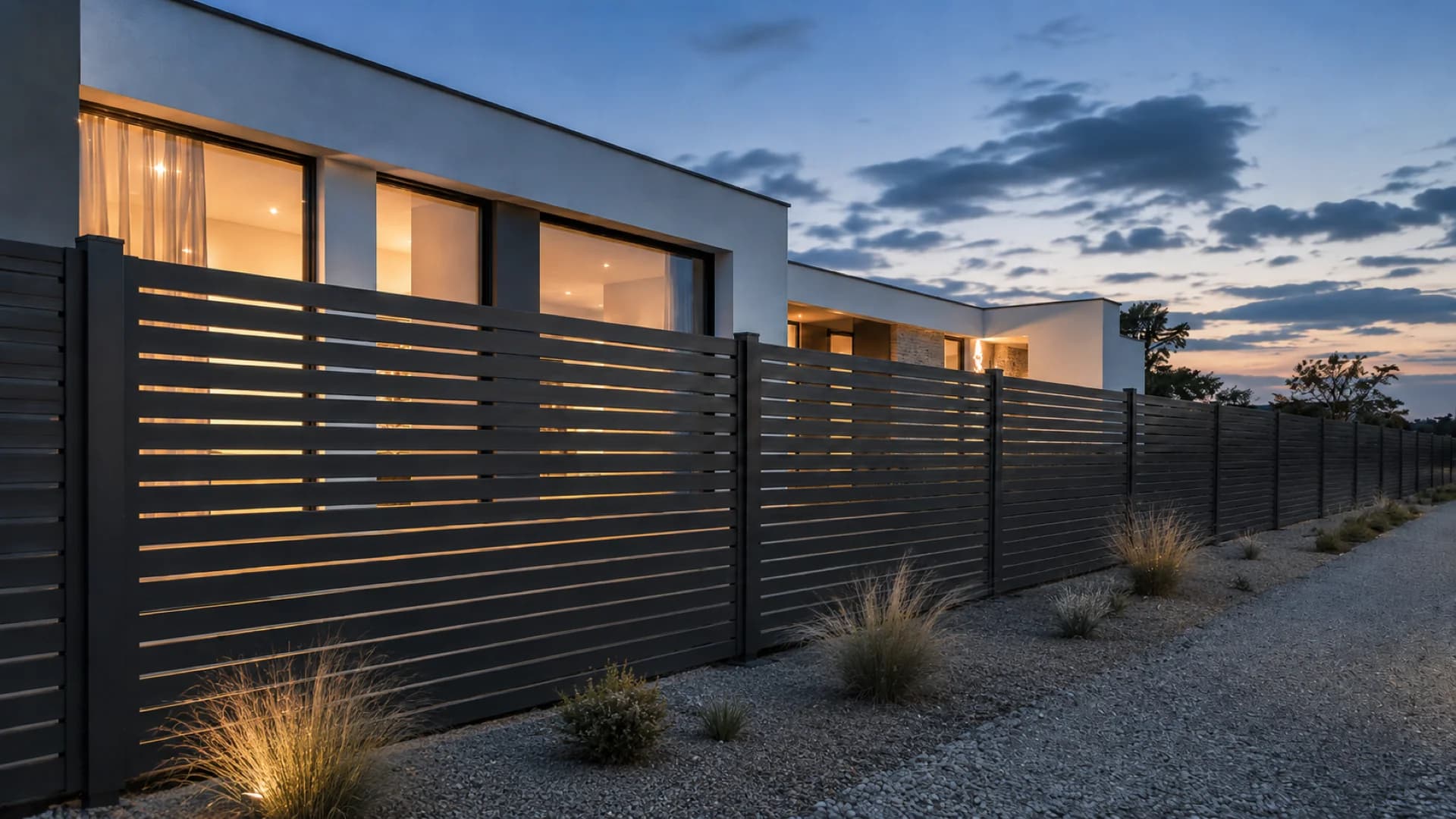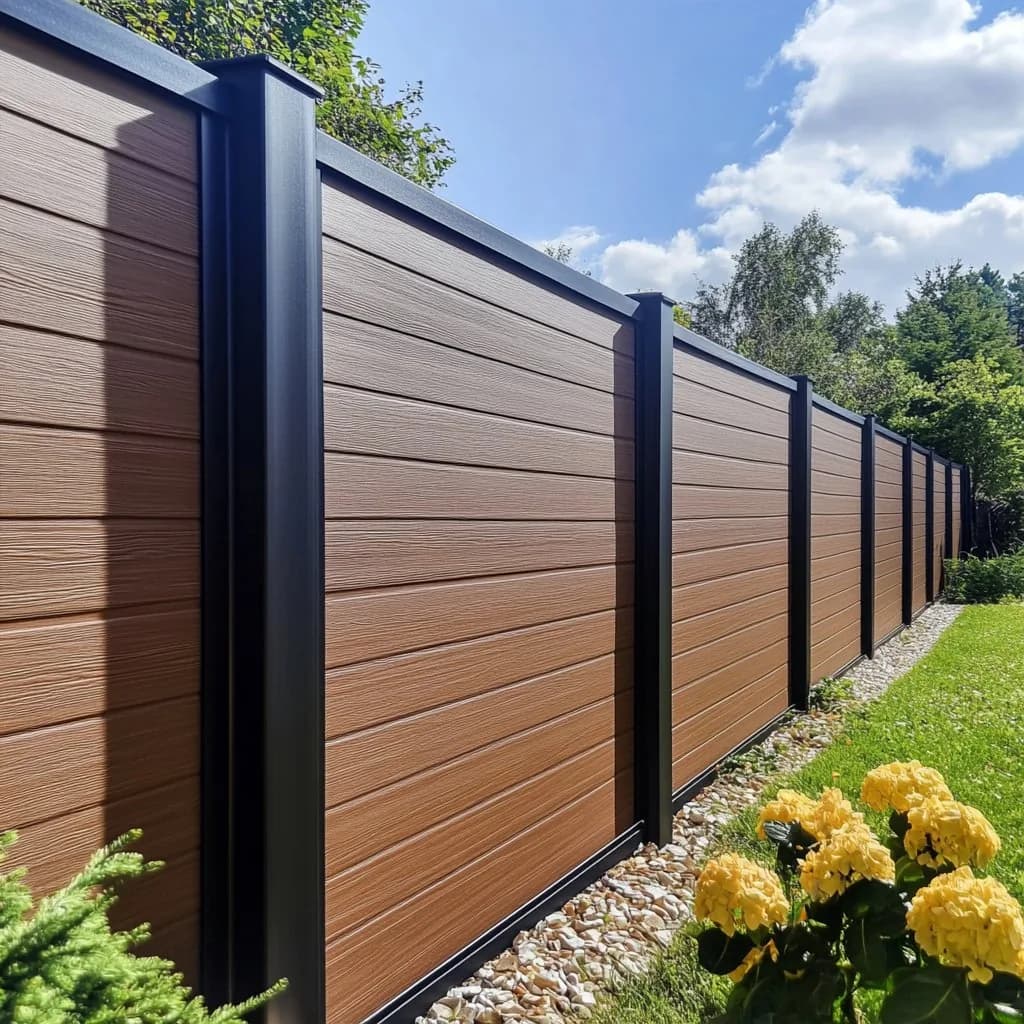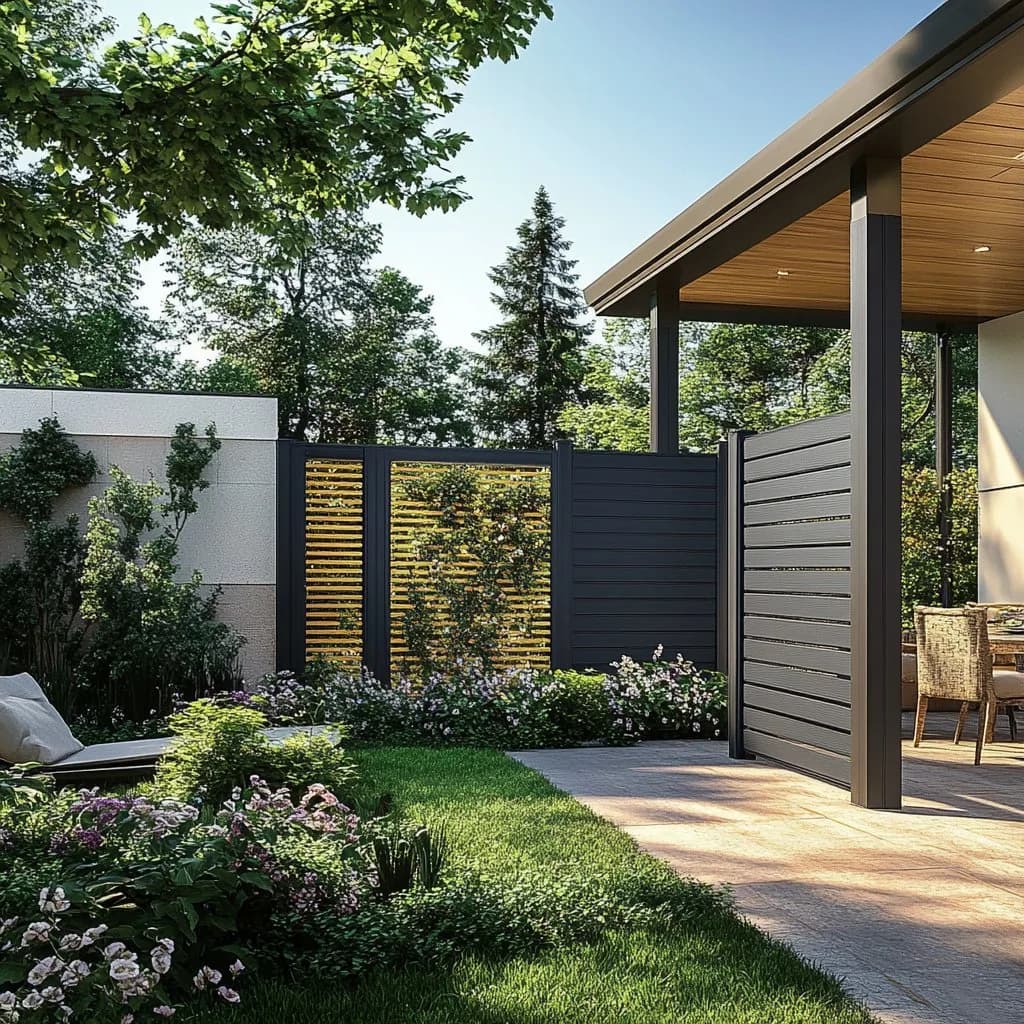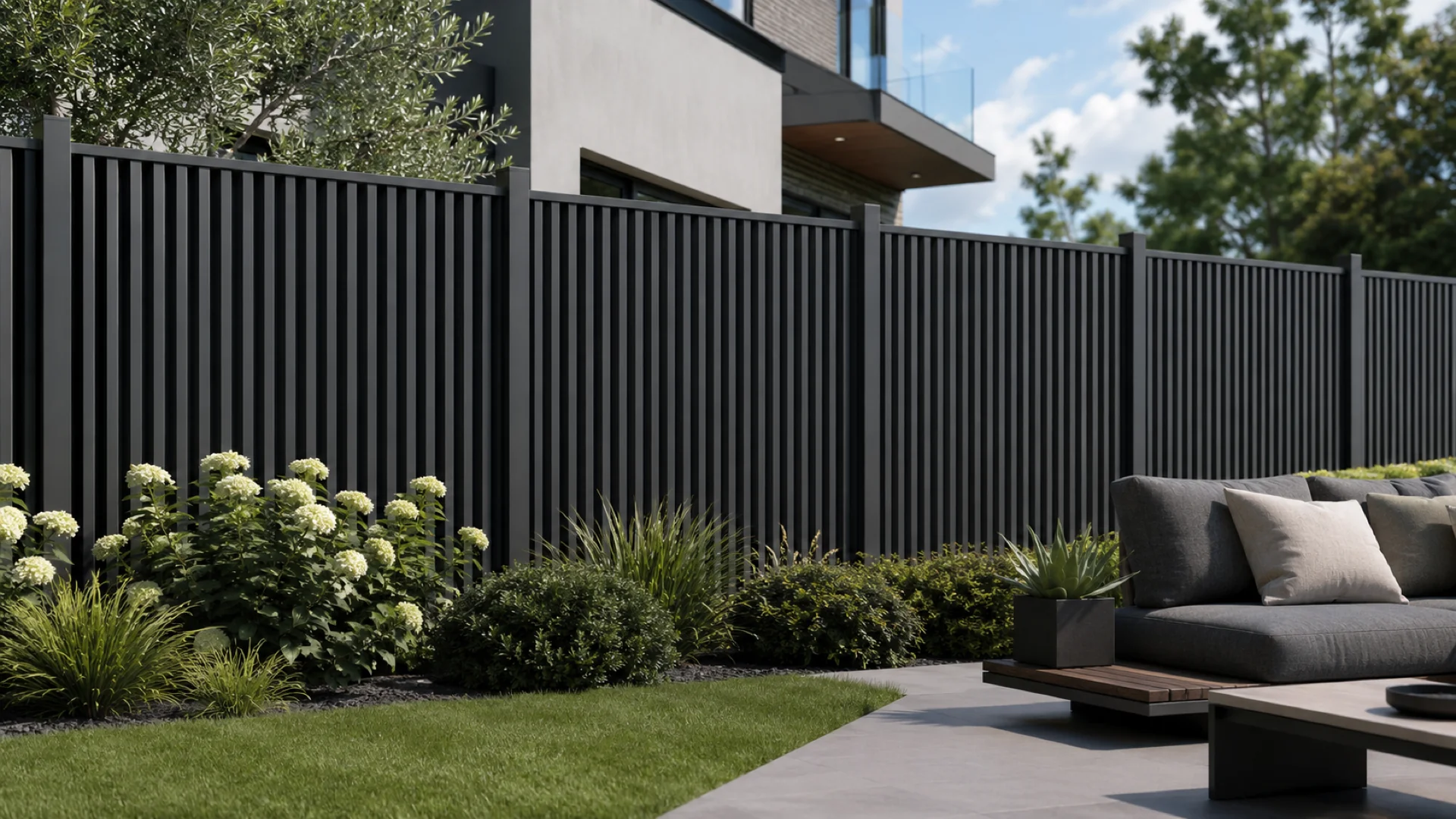
Suitable projects
Villa and garden boundaries
- Villa and garden boundaries
- Driveway and pedestrian entrances
- Projects combining fence, gate, glass or lighting


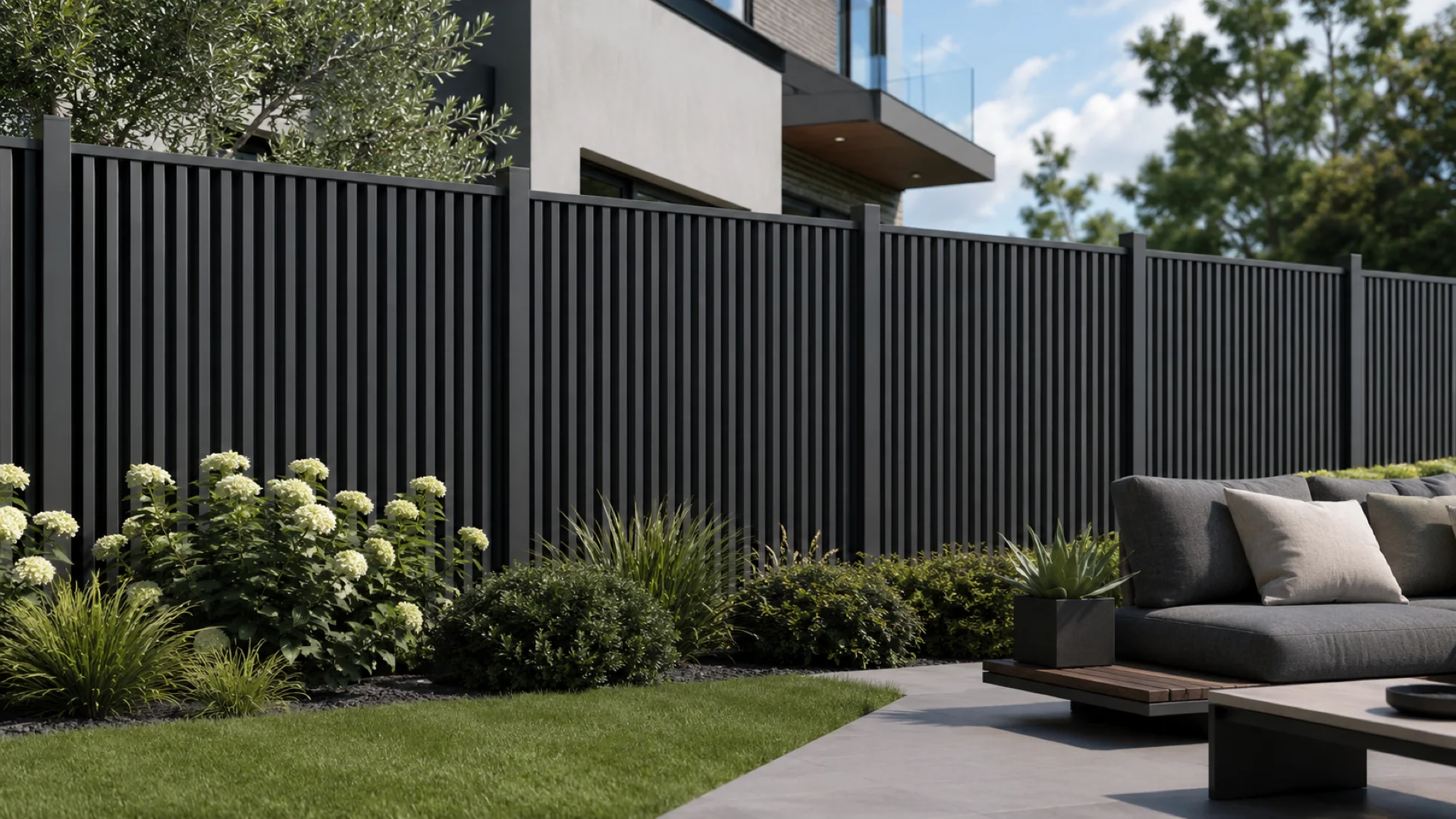
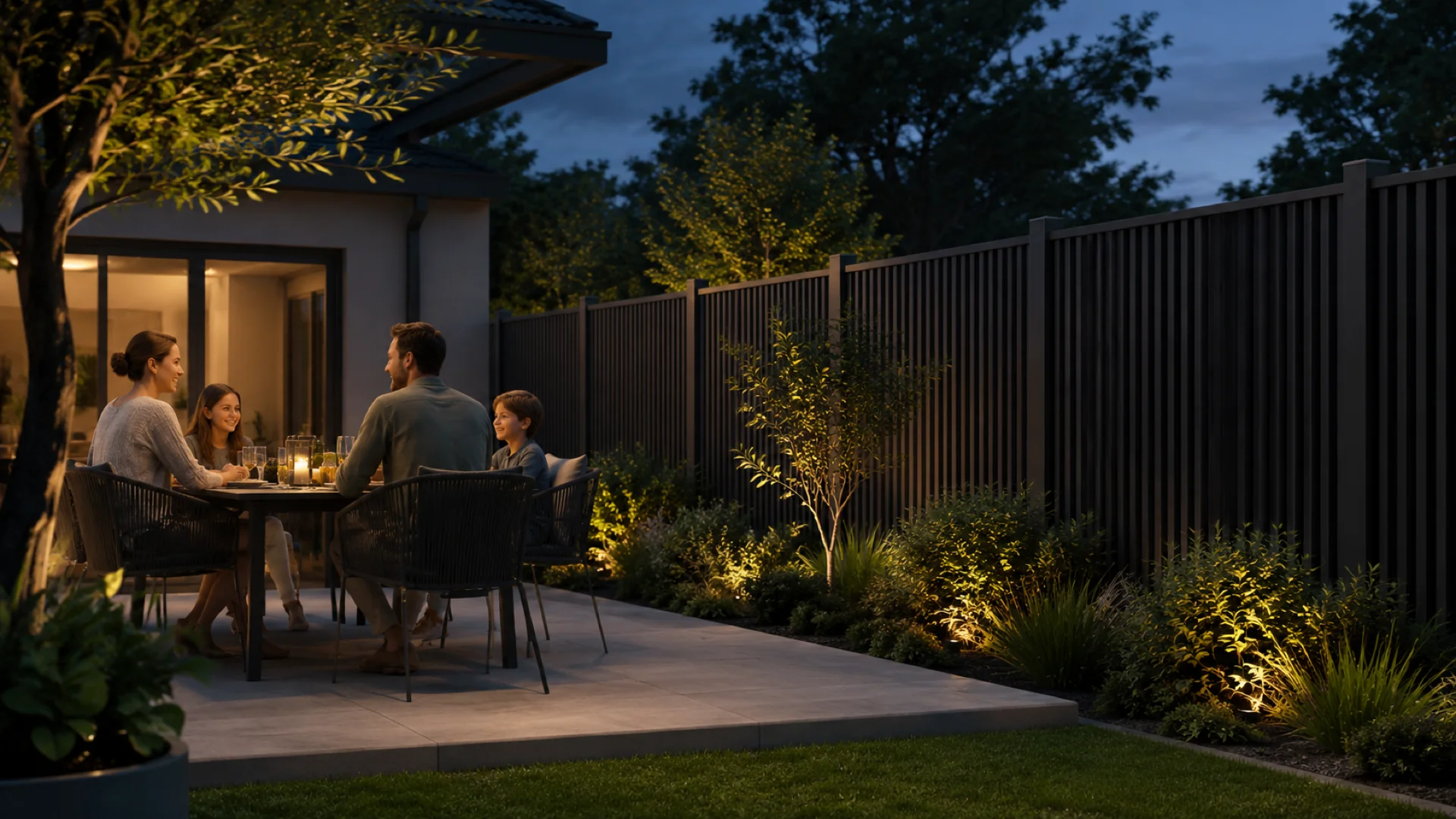
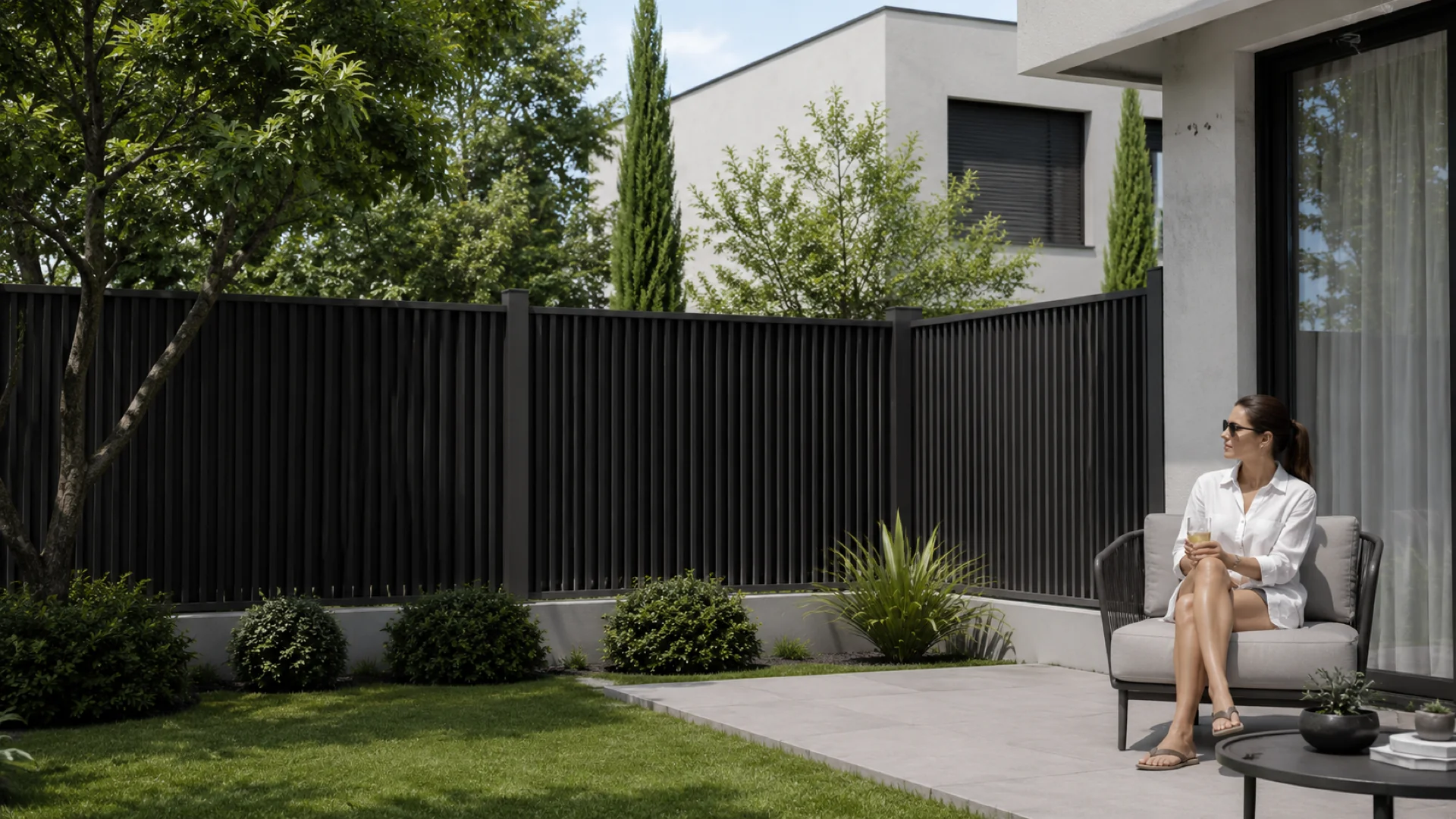
Vertical aluminium slat fence — Lineo rotated 90°. Same RAL palette, same depth, vertical rhythm.
VisioMod Verto — Vertical Aluminium Slat Fence should be reviewed as part of a fence & gate systems project, not as an isolated catalogue item. Before quotation, connect the product choice to dimensions, fixing surface, exposure, finish, adjacent systems and the documentation route expected in the project country.
Use this product when the boundary needs to work as an architectural system: privacy, gates, wind exposure and visual rhythm together.
Villa and garden boundaries
Height and privacy level
Connect the product choice to standards, fixing assumptions and quote route before budget is locked.
Use this section as a practical pre-brief. It turns the common buyer questions around glass, railing, fence and moving-panel systems into a cleaner first request, without replacing project-specific engineering review.
Share the exact opening or run length, height expectation, substrate, fixing side, slope, corner conditions and whether the product touches a terrace, balcony, facade, pool edge, gate or restaurant opening.
State the real priority: uninterrupted view, privacy, wind comfort, acoustic screening, corrosion resistance, compact stacking, full opening width, access control or night-time lighting.
Confirm the adjacent systems early. Glass railings may meet sliding glass, balcony railings may need privacy infill, fence runs may include gates, and glass walls may need threshold and drainage coordination.
These answers position Verto as the vertical slat alternative when the project wants privacy with an upright facade rhythm.
Verto is best used for aluminium boundaries where a vertical rhythm, privacy and a clean architectural line fit the house or landscape better than horizontal slats.
Compare fence systems →Choose Lineo when the design intent is a horizontal boundary line. Choose Verto when the facade, garden or entrance works better with vertical panel rhythm.
Compare Lineo →Boundary length, height, post line, privacy target, slope, gate pairing, colour and wind exposure are the useful first inputs.
Request Verto quote →Get a personalised quote, request technical documentation, or find an authorised dealer near you.
A terraced or narrow-frontage townhouse on a 5–8 m street width needs a 1500–1800 mm front boundary that reads as composed and proportionate to the elevation. A horizontal-slat fence on this frontage tends to compress the perceived height of the facade; the brief calls for a vertical rhythm that lifts the eye and reinforces the verticality of the building.
50 mm Edge slats at standard 1:0.5 packing at 1500 mm height; the vertical rhythm reads as a contemporary picket and complements upright window proportions rather than fighting them.
A villa entrance with masonry or rendered piers flanking the gate needs a fence run that reads as visually continuous with the piers themselves. Horizontal slats produce a clear cross-grain reading at the pier; vertical slats let the boundary continue the upward gesture of the pier without breaking the elevation grammar.
80 mm Bold vertical slats in RAL 7016 anthracite tie cleanly into rendered piers; the vertical bands read as a tall picket against the masonry mass.
A villa or chalet in a regional vernacular where the historic boundary language is a vertical timber picket — Provençal stone houses, Tuscan farmhouses, Tyrolean chalets. The brief asks for the picket reading without the maintenance cycle of cedar or larch.
30 mm Slim or 50 mm Edge vertical slats in Walnut or Oak woodgrain laminate carry the regional grammar; aluminium core removes the annual oiling and 7-year warp cycle.
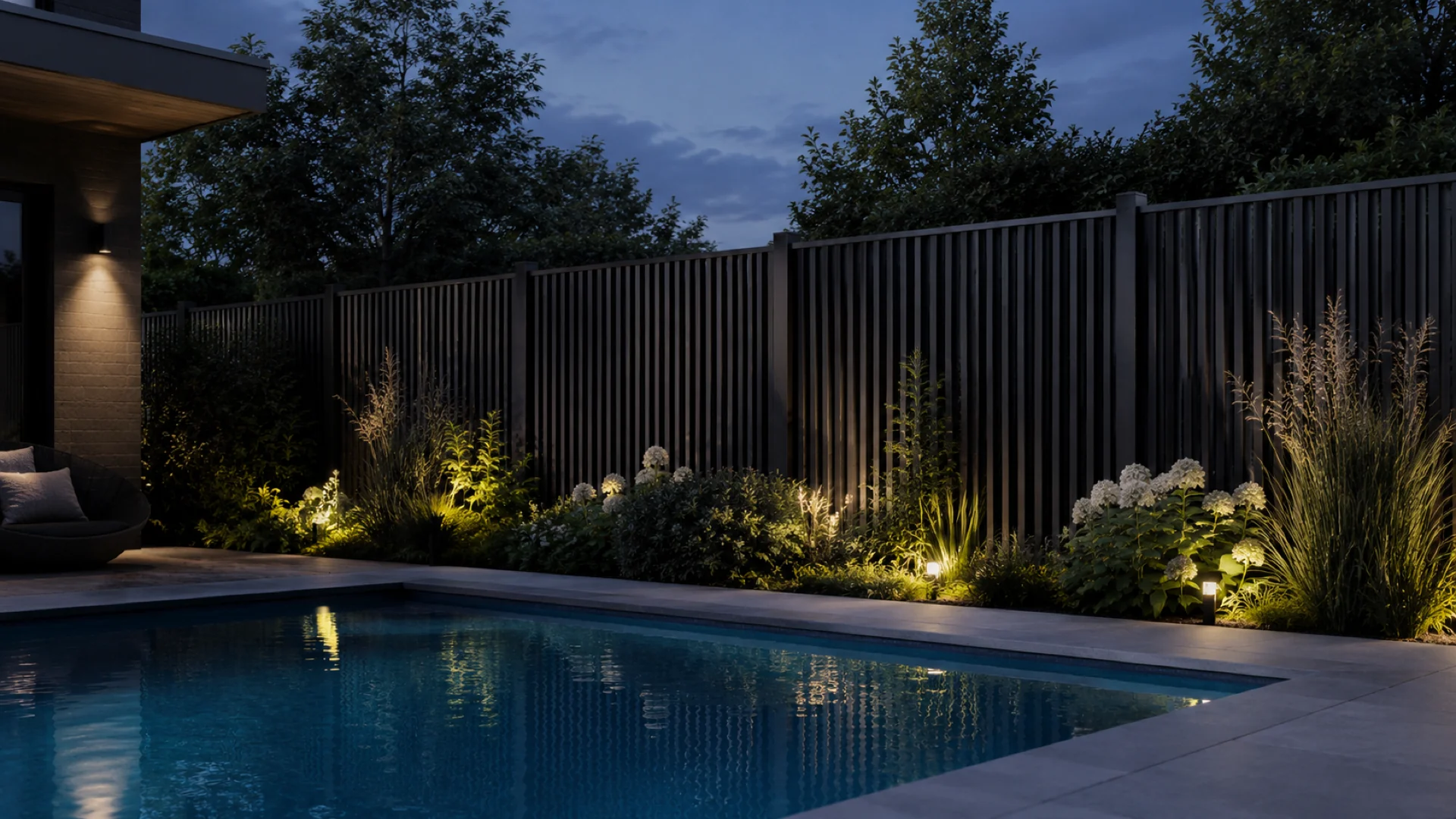
A residential pool deck where the boundary sits in front of a hedge, ornamental grass row or planted screen. Vertical slats catch the planting rhythm of trunks and stems, blending the boundary into the foliage rather than imposing a horizontal counter-line on it.
30 mm Slim at 1:0.5 packing at 1500 mm height; the vertical density mirrors the verticality of the planting and lets the fence visually recede behind foreground stems.
An estate or long suburban plot with an extended flat boundary risks reading as a monotonous horizontal band when slats run lengthwise. Vertical slats break the line into measurable rhythmic intervals, scaling the boundary down into legible bays.
80 mm Bold vertical slats at 2500 mm post spacing introduce a strong rhythmic cadence; the eye reads bays rather than an uninterrupted plane.
Pros
Cons
Why VisioMod
Verto delivers the picket reading without the refurbishment cycle that drives most timber fences toward neglect by year five. The Walnut and Oak woodgrain laminates carry the warm timber register while the 6063-T5 frame holds plumb indefinitely; no oil, no stain, no warp, no insect damage at the ground line.
Pros
Cons
Why VisioMod
Where the brief is residential or hospitality boundary rather than perimeter security, Verto delivers privacy, wind shelter and architectural intent that mesh cannot. The Qualicoat Class 2 finish in full RAL is appropriate to specifier-grade architecture rather than industrial fencing.
Pros
Cons
Why VisioMod
Wrought iron carries genuine heritage but commits the client to a repaint cycle and brings considerable dead load into the design. Verto offers a contemporary clean rhythm rather than traditional ornament, with a marine-grade aluminium frame, a factory finish warranted for ten years, and lighter hardware throughout.
Verto reads as a contemporary picket — vertical bands at controlled spacing — rather than the continuous horizontal plane of Lineo. On the elevation this changes the grammar: where Lineo asks the eye to travel along a long boundary, Verto pulls it upward, reinforcing the verticality of openings, piers and chimneys. Specifying RAL alongside the facade therefore follows different logic. RAL 7016 anthracite at 1500–1800 mm in the 50 mm slat profile is the cleanest contemporary contrast against white through-coloured render or limestone. The same RAL on charred-timber or anthracite-rendered volumes lets the fence merge into the building envelope, with the slat shadow reading as a fine vertical texture rather than a separate object. Mediterranean palettes — travertine, lime render, weathered brick — accept RAL 8019 or RAL 7022 more comfortably than pure black. The 30 mm Slim profile suits 900–1200 mm framing duties where the rhythm should read as texture; the 80 mm Bold absorbs 2000 mm boundary heights without visual heaviness; the 140 mm Wide reads as a flat plane and is specified when the boundary must align with vertical facade cladding bays. Concealed top and bottom rails are non-negotiable in this language — they preserve the picket reading. On the same property Verto pairs with Cristallo at terrace edges, Porta at the entrance with matched vertical infill, and Modulo posts in 60 × 60 or 90 × 90 mm sections.
Verto installs around its concealed top and bottom 40 × 40 mm aluminium rails, which carry the slat infill and transfer load to the posts. The two-rail strategy is what gives the system its identical view from both sides: each slat is captured top and bottom in a routed channel, locked with a concealed grub screw at one end, leaving no fasteners visible on either face. Slats are aligned at the factory to a 0.5 mm tolerance per metre; on site, the assembled bay is offered up between posts and levelled before the slats are dropped in. Two foundation strategies cover virtually every site: M12 chemical or expansion anchors through a 150 × 150 × 8 mm baseplate onto an existing reinforced slab (≥ 150 mm C25/30, ETAG 001 pull-out values verified), or 60 × 60 / 90 × 90 mm posts concrete-set 500 mm (Zone 1) to 700 mm (Zones 3–4) below grade per local frost depth in C20/25 with 75 mm cover. Baseplates carry ±15 mm three-axis adjustment. When paired with Porta, allow a dedicated reinforced 140 × 140 mm hinge post.
Narrow 6 m frontage, white through-coloured render with anthracite zinc dormer, party-wall context.
Specification: Verto 50 mm Edge vertical slats at 1500 mm height, RAL 9005 deep black with semi-gloss finish. Concealed top and bottom rails, hidden posts set 700 mm into a new C25/30 strip foundation. Matched Porta pedestrian gate.
Outcome: Vertical rhythm lifts the eye and aligns with the upright proportions of the front door and dormer; graphic black-on-white facade reading; complies with Antwerp building-line setback.
Stone piers flanking a vehicle gate, lime-rendered facade, mature olive backdrop.
Specification: Verto 80 mm Bold vertical slats at 1800 mm height in Walnut woodgrain laminate. Coastal-tier 1.4 kN/m² posts in 90 × 90 mm Modulo section. Matched Porta double-leaf swing gate at 3500 mm clear opening with vertical Verto infill carrying through.
Outcome: Vertical bands continue the upward gesture of the stone piers; warm Walnut register sits comfortably with lime render and olive bark; gate reads as continuation of the boundary rather than an event.
Traditional Tyrolean chalet with charred-timber facade above a stone basement plinth, snow-zone exposure.
Specification: Verto 30 mm Slim vertical slats at 1200 mm height in Anthracite Wood woodgrain. Concrete-set posts to 700 mm below grade per local frost depth. Wide flat 140 mm Verto specified at the gate piers as solid-plane accents.
Outcome: Slim vertical density reads as a fine textural plane against the charred timber; aluminium core eliminates the snow-cycle warp that destroys traditional larch pickets within a decade; chalet boundary language preserved without the maintenance cycle.
A terraced or narrow-frontage townhouse on a 5–8 m street width needs a 1500–1800 mm front boundary that reads as composed and proportionate to the elevation. A horizontal-slat fence on this frontage tends to compress the perceived height of the facade; the brief calls for a vertical rhythm that lifts the eye and reinforces the verticality of the building.
VisioMod System
Instead of showing only other products from the same category, this section surfaces reference scenes that match the actual use logic of this product more closely.

Choose Verto when the project wants privacy but the facade language needs an upright cadence rather than Lineo's long horizontal run.