Suitable projects
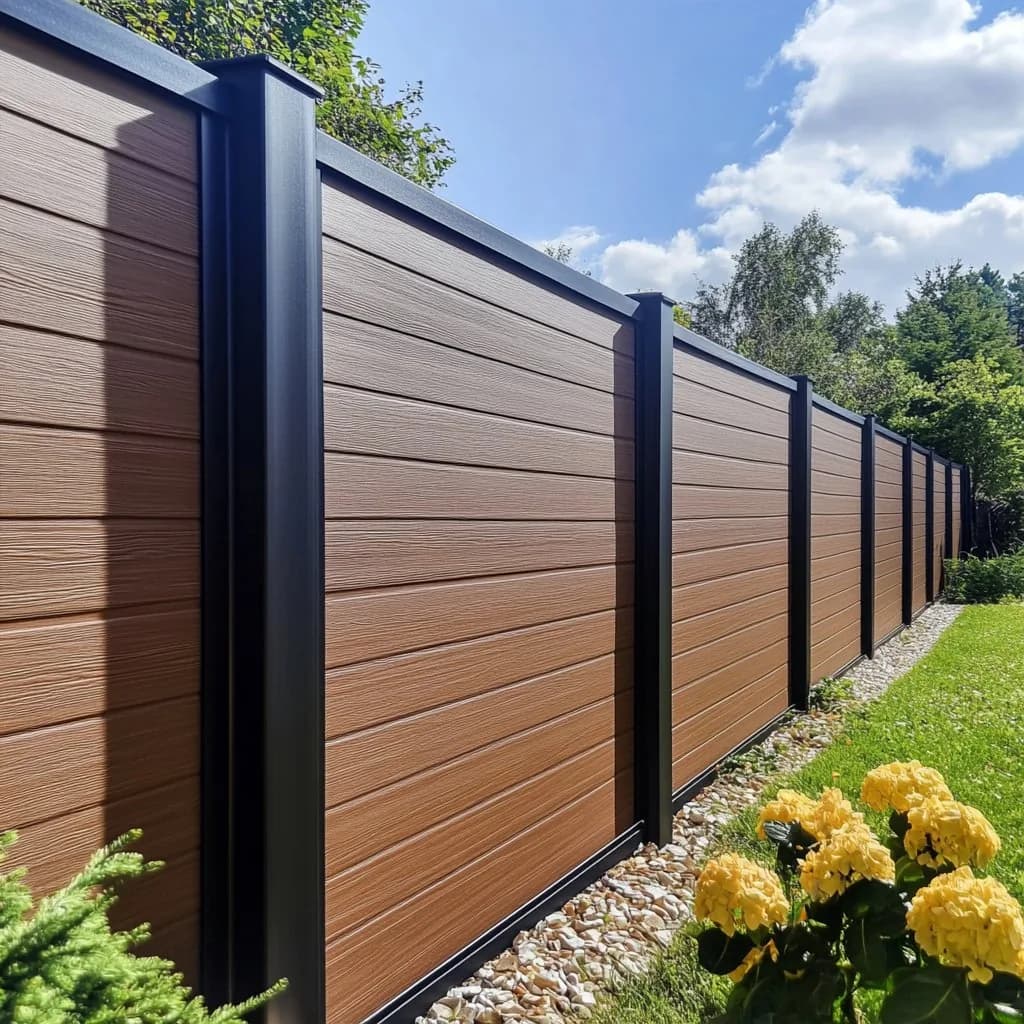
Villa and garden boundaries
- Villa and garden boundaries
- Driveway and pedestrian entrances
- Projects combining fence, gate, glass or lighting


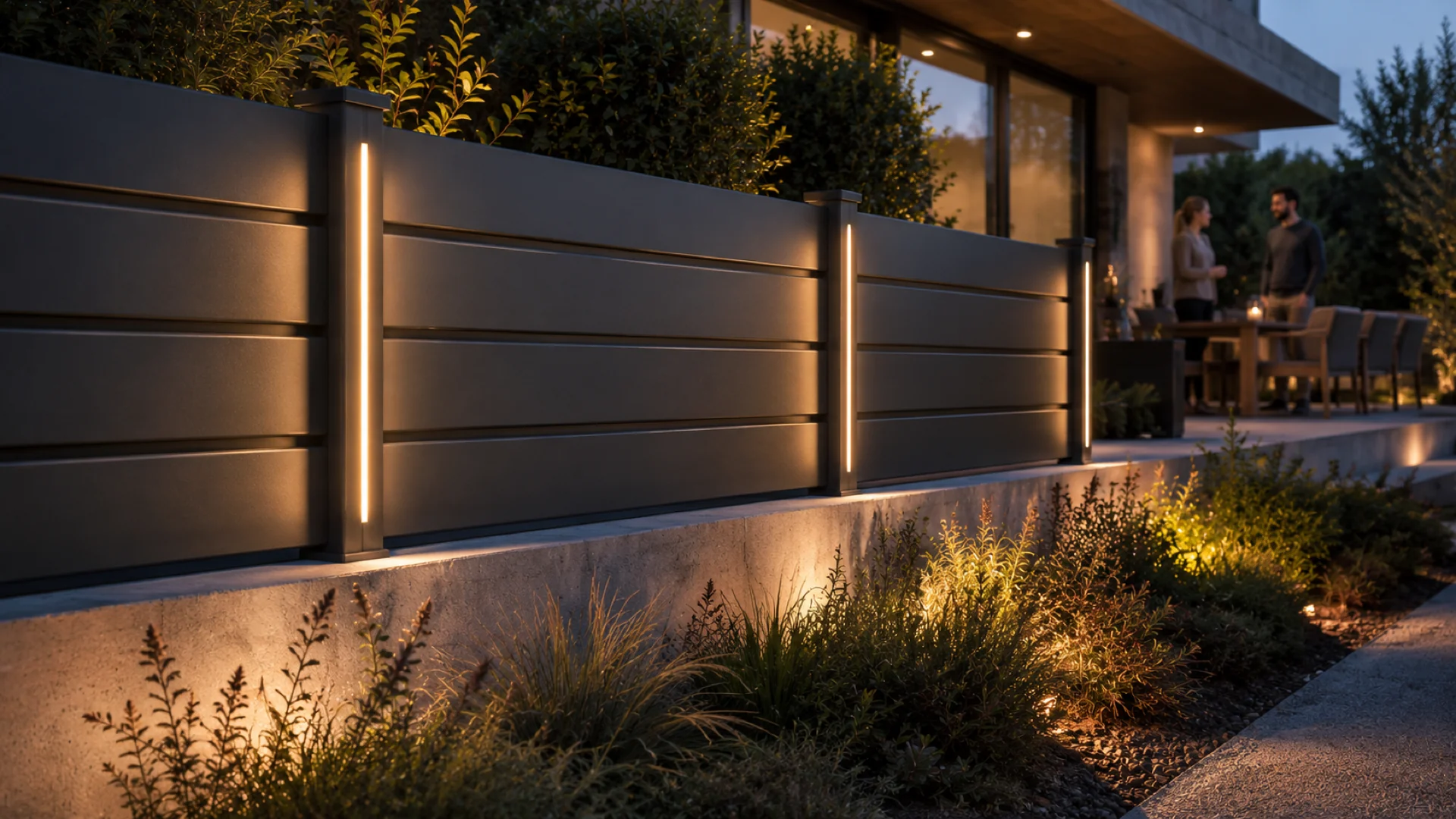
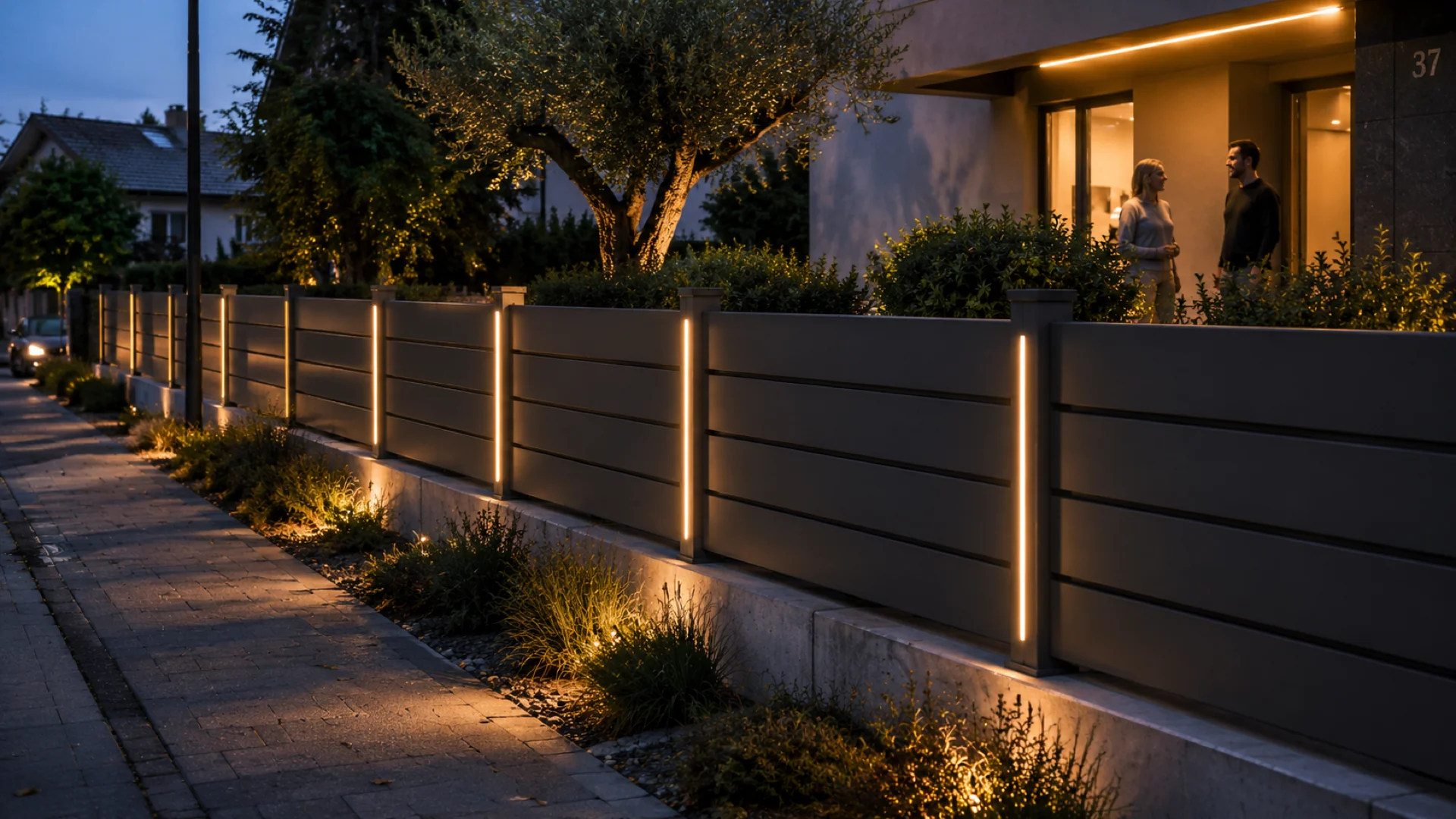
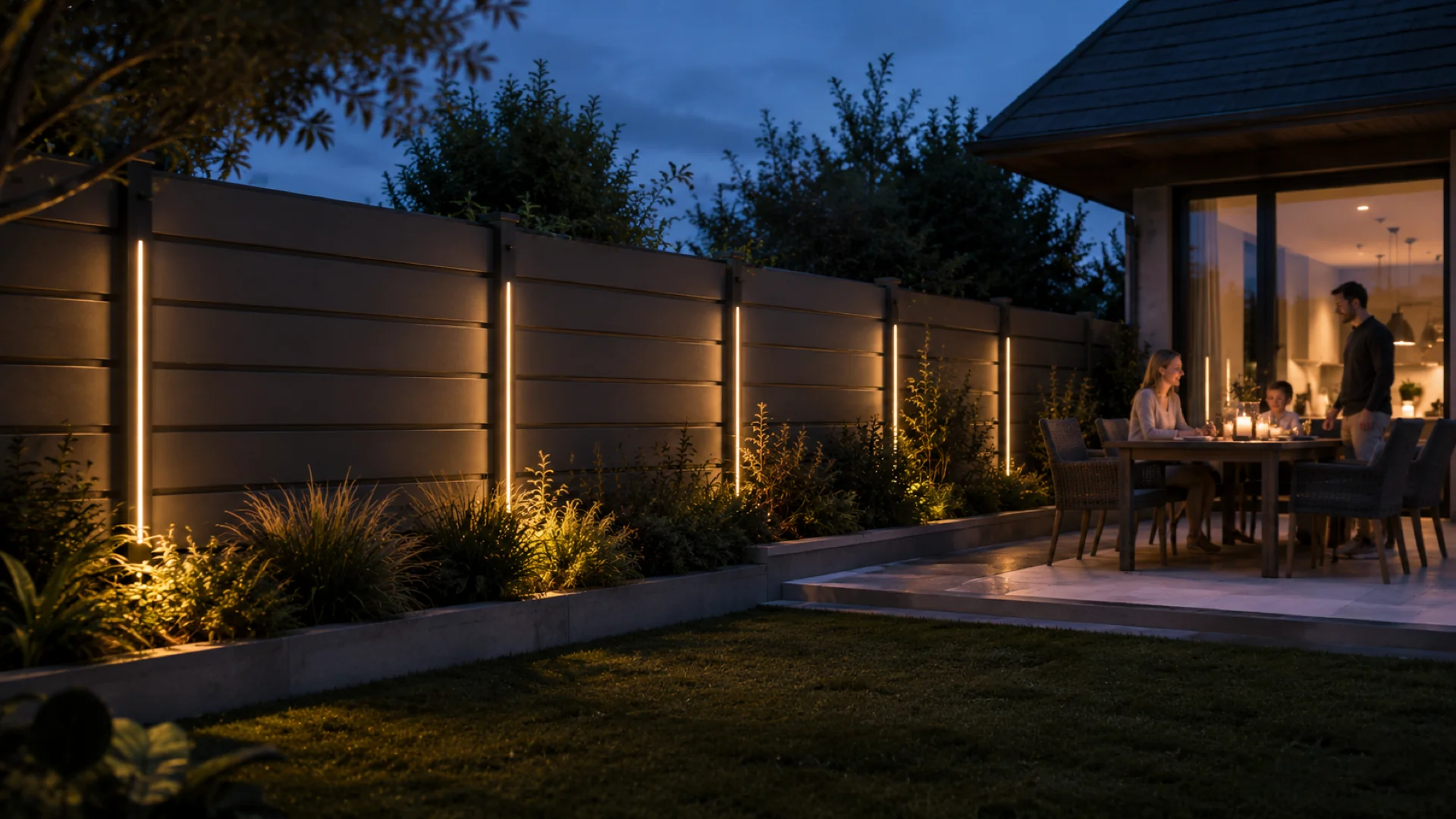
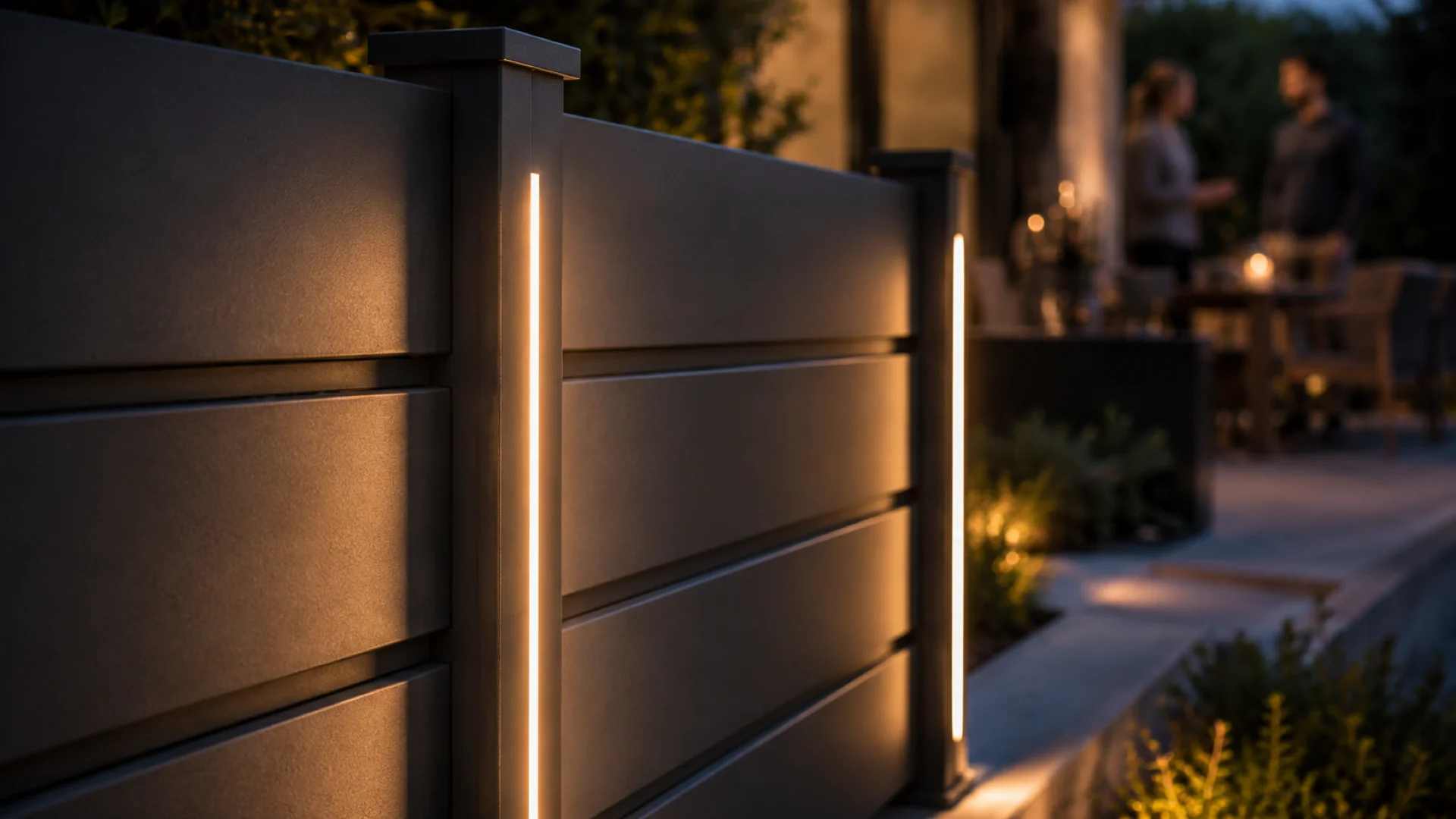
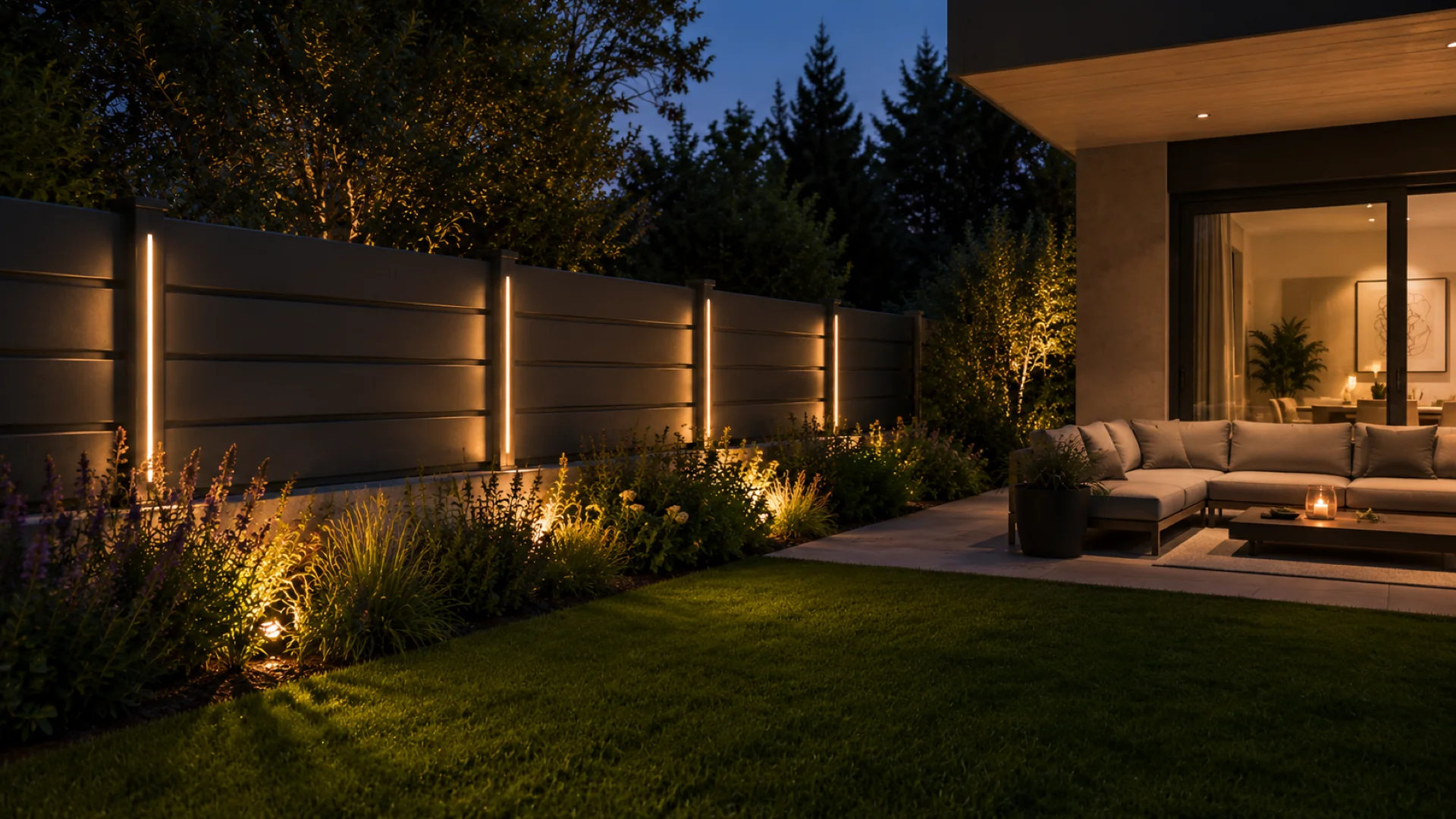
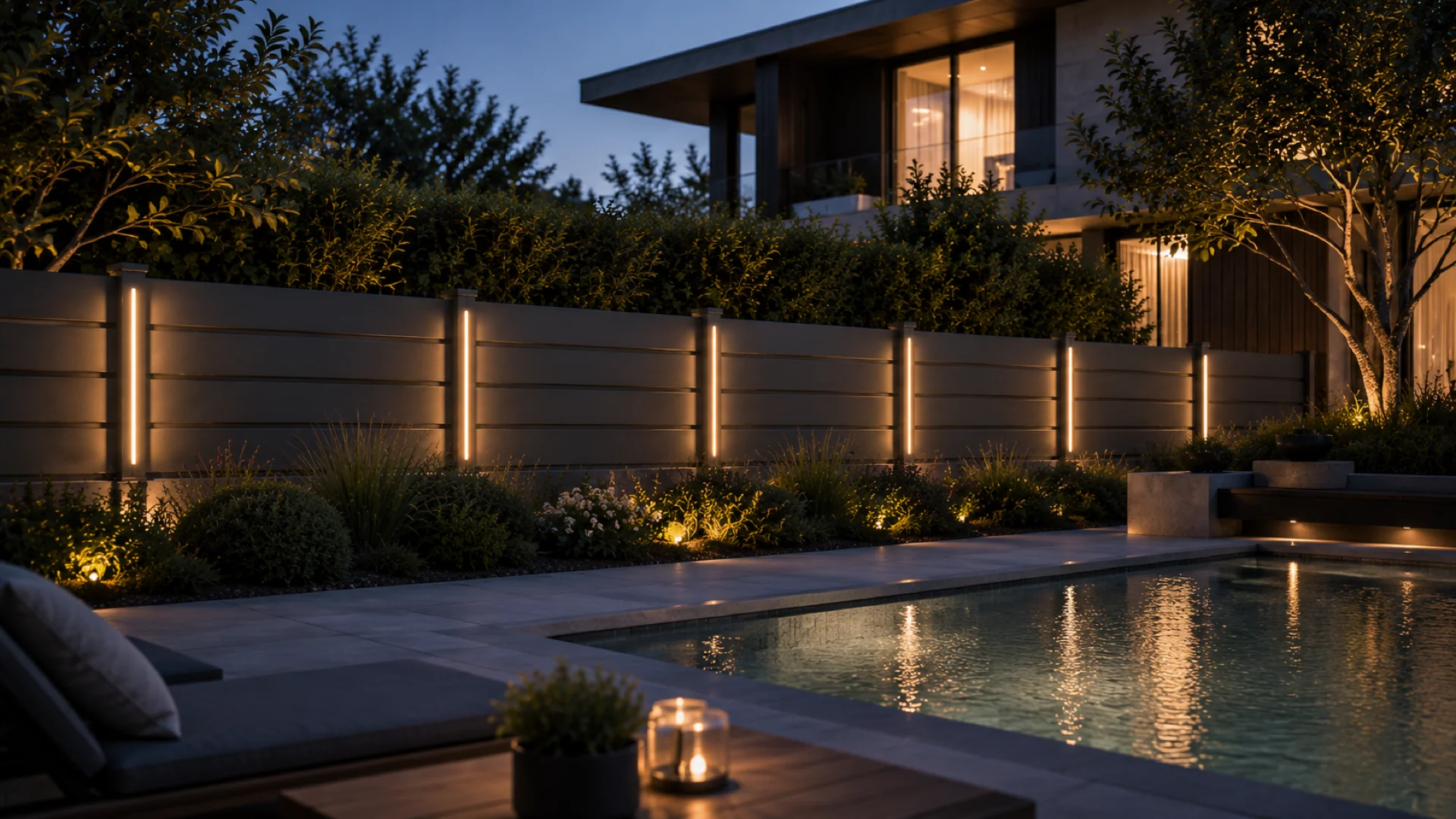
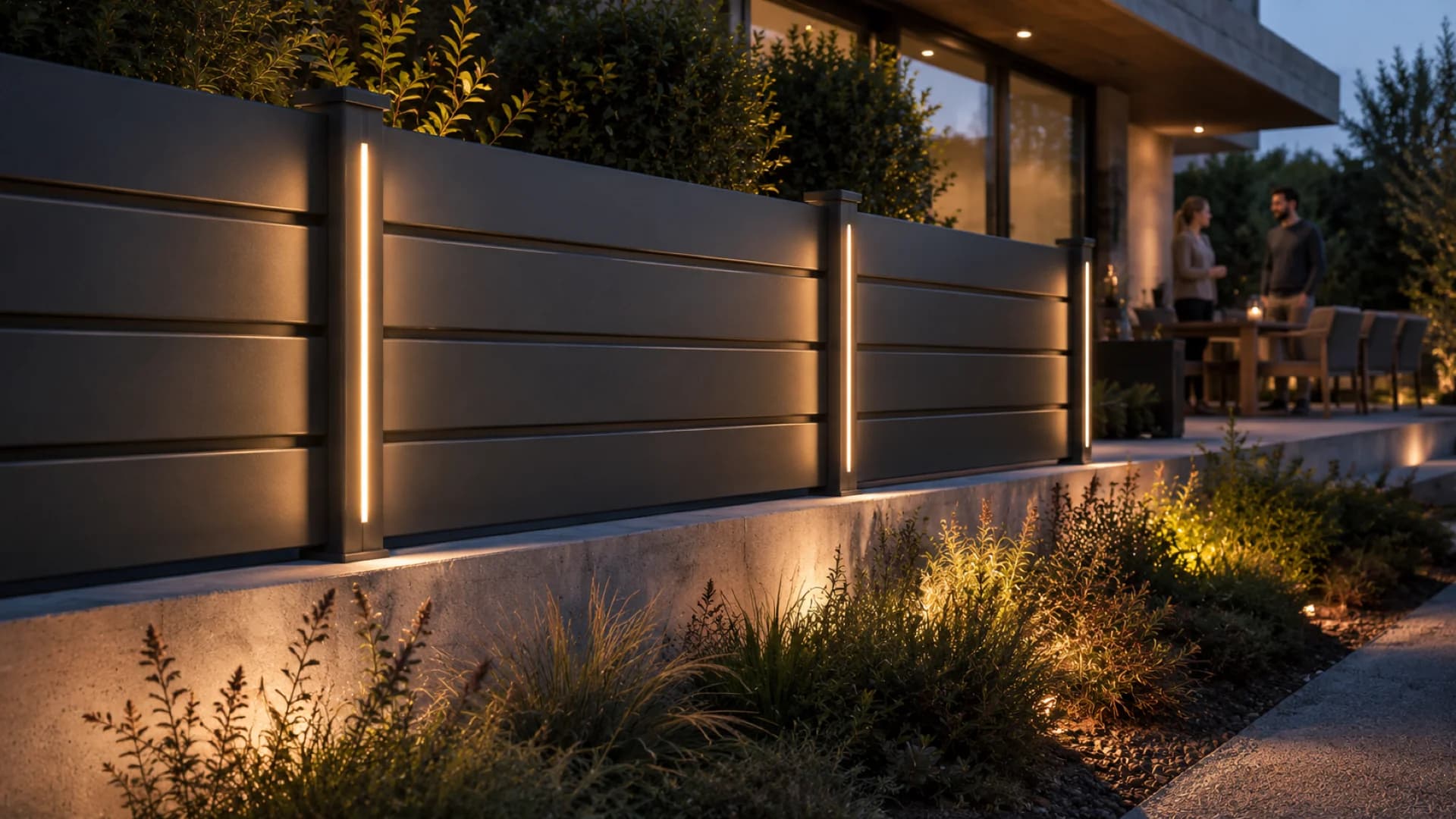
LED-integrated fence panels and post caps. Backlit, pixelated, linear strip or cap LED — IP68 + smart-home control.
VisioMod Lumina — LED-Integrated Fence System should be reviewed as part of a fence & gate systems project, not as an isolated catalogue item. Before quotation, connect the product choice to dimensions, fixing surface, exposure, finish, adjacent systems and the documentation route expected in the project country.
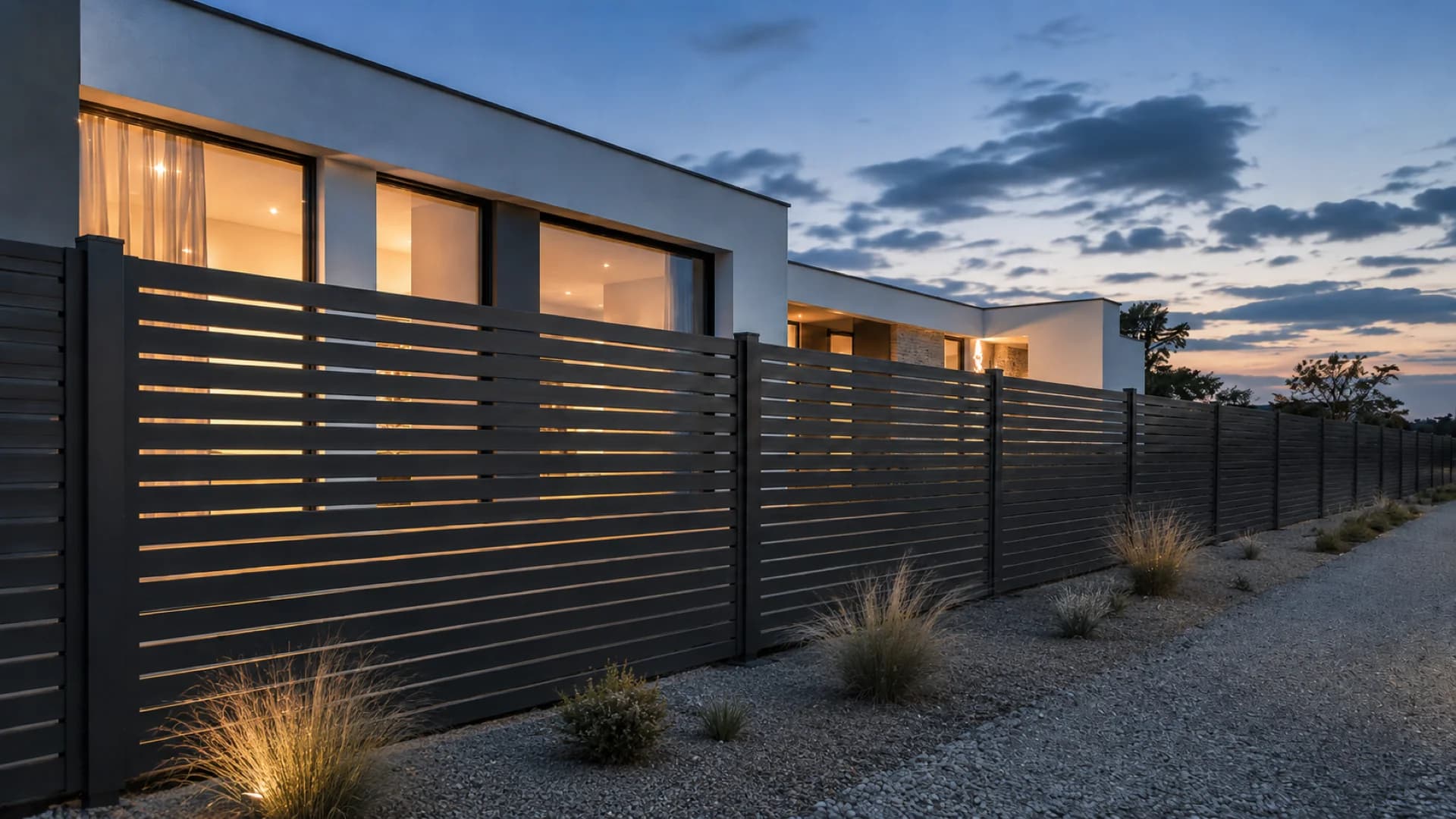
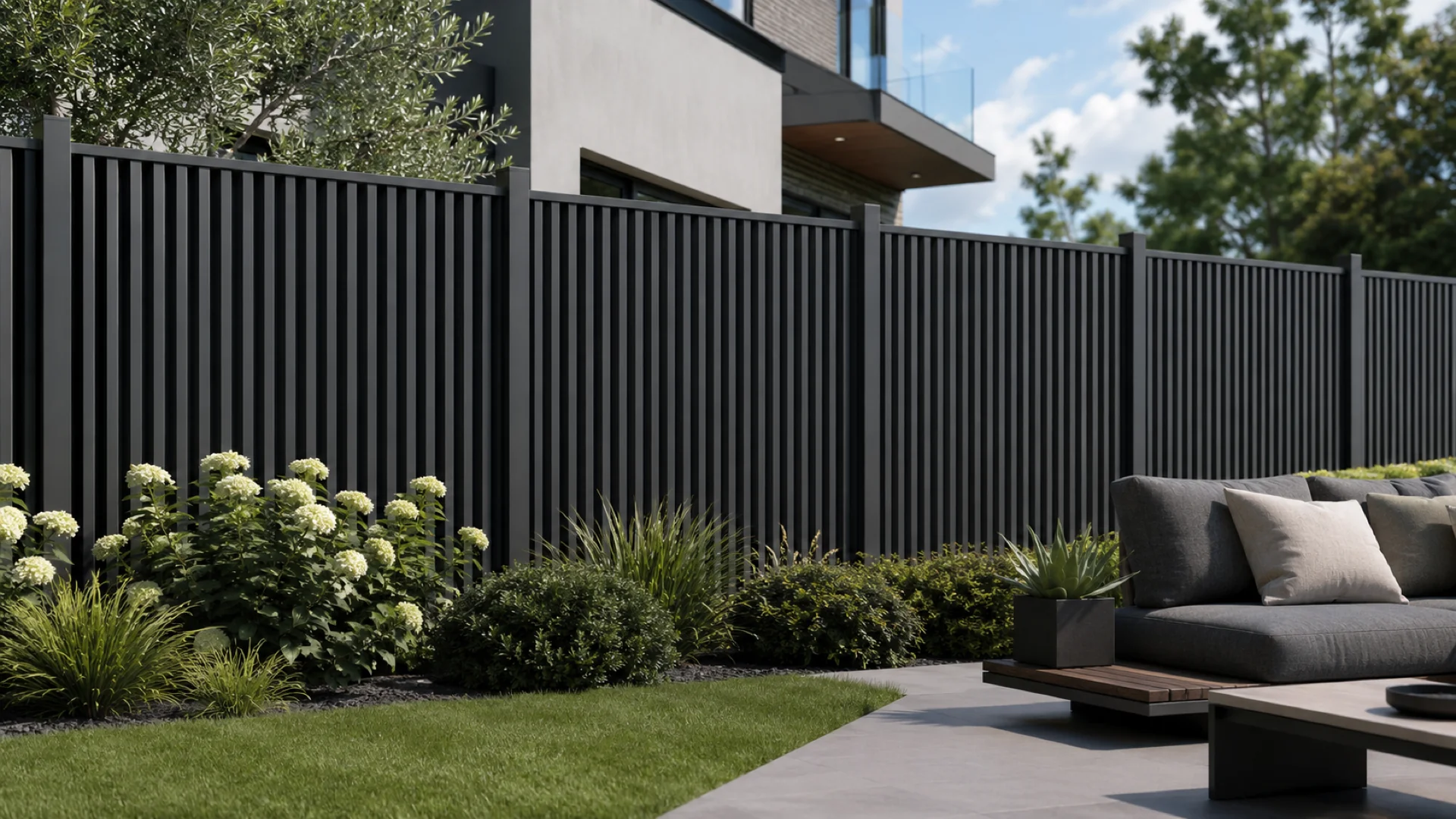
Use this product when the boundary needs to work as an architectural system: privacy, gates, wind exposure and visual rhythm together.
Villa and garden boundaries
Height and privacy level
Connect the product choice to standards, fixing assumptions and quote route before budget is locked.
Use this section as a practical pre-brief. It turns the common buyer questions around glass, railing, fence and moving-panel systems into a cleaner first request, without replacing project-specific engineering review.
Share the exact opening or run length, height expectation, substrate, fixing side, slope, corner conditions and whether the product touches a terrace, balcony, facade, pool edge, gate or restaurant opening.
State the real priority: uninterrupted view, privacy, wind comfort, acoustic screening, corrosion resistance, compact stacking, full opening width, access control or night-time lighting.
Confirm the adjacent systems early. Glass railings may meet sliding glass, balcony railings may need privacy infill, fence runs may include gates, and glass walls may need threshold and drainage coordination.
These answers connect Lumina to fence lighting searches while keeping the project review practical and specification-led.
Lumina is best used where the fence boundary should include integrated lighting for entrances, garden edges, hospitality areas or evening architectural effect.
Compare fence systems →Lighting should be planned with the fence when cable routes, drivers, post layout, control zones and maintenance access need to be coordinated before installation.
Compare post system →Confirm lit zones, post layout, power route, control expectation, colour temperature preference, service access and how lighting connects to gates or glass sections.
Request lighting review →Get a personalised quote, request technical documentation, or find an authorised dealer near you.
A new-build villa with a 60 m boundary along a private lane, where the architect wants the fence to read as a continuous architectural plane by day and as a quiet horizontal line at dusk, fully integrated into the home automation system already specified for interior lighting and shading.
Linear strip mode in IP68 channels between Lineo 50 mm slats; sunset trigger via the existing Matter bridge; 3000 K to align with the interior LED palette.
A boutique hotel uses the boundary as the first element guests see on arrival. The brief is a beacon at the address point and a calmer rhythmic light along the rest of the run, with a dimming profile that holds at low level after midnight to respect neighbours.
Continuous backlight at the gate piers behind Inciso laser-cut panels; cap LEDs every Modulo post along the secondary run; scheduled curfew dim handled at the property management automation layer.
A seafront property within 1 km of open coast needs perimeter lighting that survives chronic salt aerosol, occasional submersion at the lower fence base during winter storms, and twenty seasons of UV without driver replacement on a yearly cycle.
IP68 emitters and IP67 driver inside a sealed indoor cabinet 8 m back from the boundary; A4 stainless cable glands; cap-LED salt-spray inspection added to the maintenance cycle.
An existing residence already running a Matter-based home automation system needs a perimeter that arrives in the same control grammar — appearing as a scene alongside lighting, shading and irrigation — without dragging in a third-party fence-light app and a separate hub.
Zigbee/Matter bridge exposes Lumina as a native device; presence-based approach scenes and holiday-mode randomisation handled by the existing controller rather than a Lumina-specific app.
A long estate perimeter where one section is too far from mains for economical 230 V routing, but the architect rejects standalone solar caps because of their visible degradation across years and inconsistent night performance.
24 V DC SELV runs from a hybrid mains/solar driver cabinet at the estate's technical building; cap LEDs on Modulo posts only in this section; consistent dimming and colour temperature across the wired and remote zones.
Pros
Cons
Why VisioMod
Lumina collapses two specifications into one. The fence and its lighting share a substrate, a control bus, a finish batch and a single five-year warranty. The light is delivered from inside the panel rather than aimed at it from a buried fitting, so the architectural reading at dusk is consistent across the run instead of dependent on installer skill at every uplighter pocket.
Pros
Cons
Why VisioMod
Lumina is wired 24 V DC SELV from a single driver cabinet, so output is constant across seasons and across the run, full dimming is supported, and there is no battery to degrade. Where mains routing is genuinely impractical, the same SELV bus can be fed from a hybrid mains/solar cabinet rather than from a battery in every cap.
Pros
Cons
Why VisioMod
Lumina meets the same specification grammar an architect already uses for interior and facade luminaires — EN 60598-1, EN IEC 62471, IP68 emitters in a marine-grade aluminium substrate — while still arriving in the home as a Matter scene. It is a specifier-grade product that happens to be smart-home native, not a consumer kit retrofitted to a fence.
At dusk, Lumina is a horizontal light line read against the building envelope rather than a series of point sources read against the sky. That distinction governs every specification choice. Linear strip mode along Lineo or Verto slats is the most disciplined option for long, calm elevations: the light grazes the slat shadow rather than illuminating the panel face, and the boundary registers as a quiet line at standing eye level without competing with facade uplighting on the building itself. Continuous backlight is reserved for moments — gate piers, address points, a single Inciso laser-cut feature — where a beacon reading is actively wanted. Pixelated backlight through Sereno-style perforation is the most graphic choice and works best where the perforation pattern is already part of the design idea by day. Cap LEDs on Modulo posts are the right answer when the rhythm of posts already does compositional work along a long run. Colour temperature follows the building's interior palette: 2700 K reads as residential warmth alongside warm-white interiors and timber decking, 3000 K is the calm modern default, 4000 K is reserved for civic, hospitality back-of-house and cooler stone palettes. In a Matter-native home, Lumina arrives as a scene alongside interior lighting and shading: sunset triggers, presence-led approach lighting and a holiday mode that randomises across the perimeter become part of the property's everyday grammar rather than a bespoke fence app.
Lumina runs on 24 V DC SELV, which keeps the boundary wiring outside the AC compliance regime but demands disciplined cable sizing to manage voltage drop across long perimeters. Specify a single technical cabinet for the IP67 driver — typically inside the garage, plant room or a dedicated boundary cabinet within 15 m of the longest zone — and run SELV cable in dedicated UV-stable conduit alongside the post foundations. Each zone is sized at 60–200 W; long runs are split into multiple zones rather than oversized cable. IP68 emitters are factory-sealed; site terminations use the supplied gel-filled connectors and A4 stainless cable glands, never field-stripped heat-shrink. The Zigbee/Matter bridge sits with the driver in the cabinet and requires line-of-sight or a dedicated mesh repeater to the home's main controller. RF remotes and wall dimmers operate independently of the bridge and remain functional during home-automation outages. On coastal sites, route SELV cabling above the salt-water splash line and specify drip loops at every emitter entry. All driver positions must be accessible for the year-five scheduled replacement without dismantling the fence.
Seafront new-build with a 90 m perimeter, full Matter home automation, interior LED palette at 3000 K.
Specification: Linear strip Lumina between Lineo 50 mm slats along the main run, continuous backlight behind Inciso laser-cut panels at the two gate piers, IP67 driver cabinet in the garage with SELV runs to four zones. Sunset trigger and a midnight curfew dim handled by the existing Matter controller.
Outcome: Boundary reads as a quiet horizontal line at dusk and disappears by day; no separate uplighter contractor; perimeter scene appears in the home alongside interior lighting and shading.
Hospitality property with salt-aerosol exposure, guest arrival as the priority, neighbouring residential properties limiting late-night light spill.
Specification: Cap-LED Lumina on every Modulo post along the street boundary, continuous backlight at the entrance gate behind a Sereno perforated panel, IP68 emitters and IP67 driver cabinet 12 m back inside the property's technical building. Salt-spray inspection added to the property's quarterly maintenance cycle.
Outcome: Address point reads as a beacon on arrival; cap-LED rhythm gives the boundary a calm dotted cadence at low output after midnight; no battery degradation across the coastal exposure.
Existing residence with a Matter-based home automation system already controlling interior lighting, shading and irrigation; 45 m perimeter retrofit.
Specification: Pixelated Lumina behind Sereno perforated panels at the front boundary, linear strip between Verto vertical slats along the side run, single Zigbee/Matter bridge in the existing controller cabinet. Holiday-mode randomisation handled by the home automation layer.
Outcome: Perimeter arrived in the existing home as a Matter scene without a third-party app; no driver visible on the boundary; output and colour temperature consistent with the interior palette across all zones.
A new-build villa with a 60 m boundary along a private lane, where the architect wants the fence to read as a continuous architectural plane by day and as a quiet horizontal line at dusk, fully integrated into the home automation system already specified for interior lighting and shading.
VisioMod System
Instead of showing only other products from the same category, this section surfaces reference scenes that match the actual use logic of this product more closely.

Lumina is the more accurate reference when the fence is also expected to shape the evening atmosphere, not just close the plot.

A better Lumina reference when the brief leans toward a continuous lit surface rather than only post-cap or strip lighting accents.