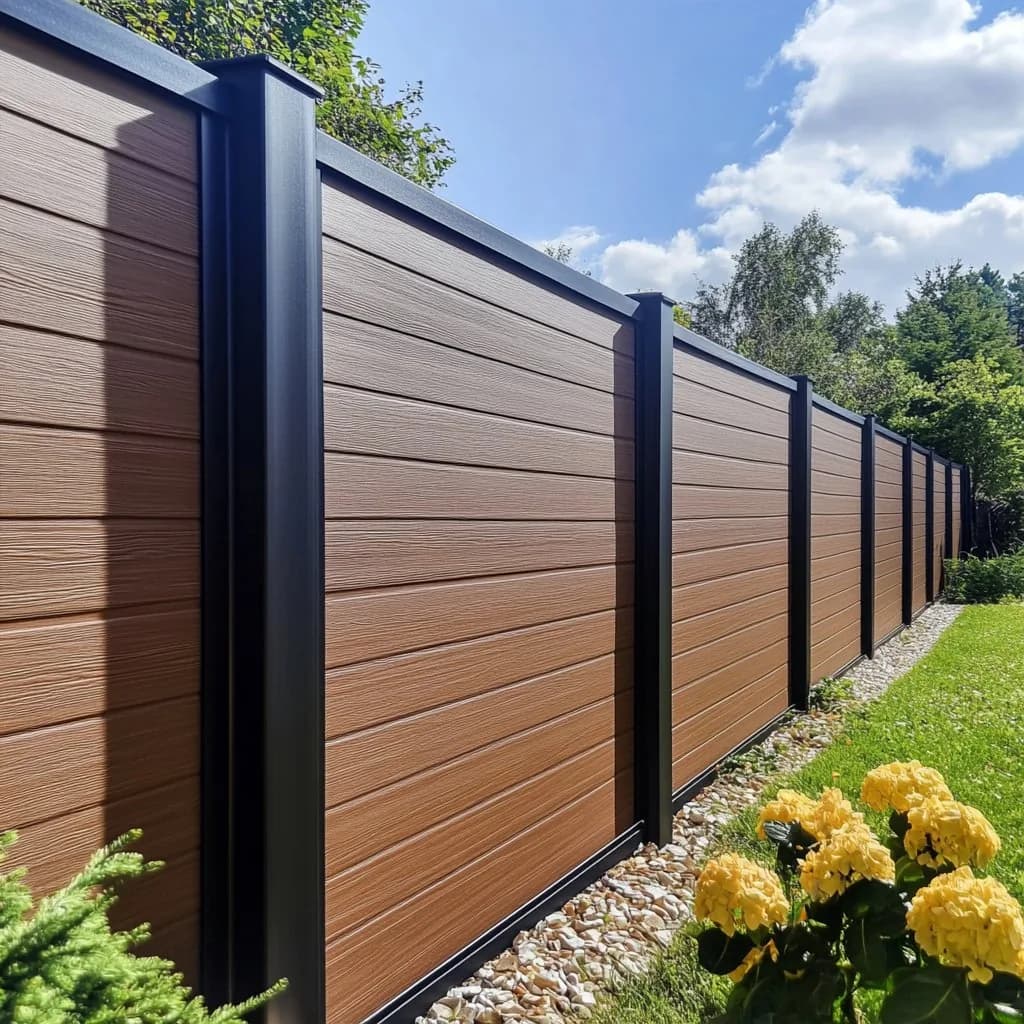

VisioMod Bosco — WPC + Aluminium Fence
Formerly known as Bosco WPC Composite Fence
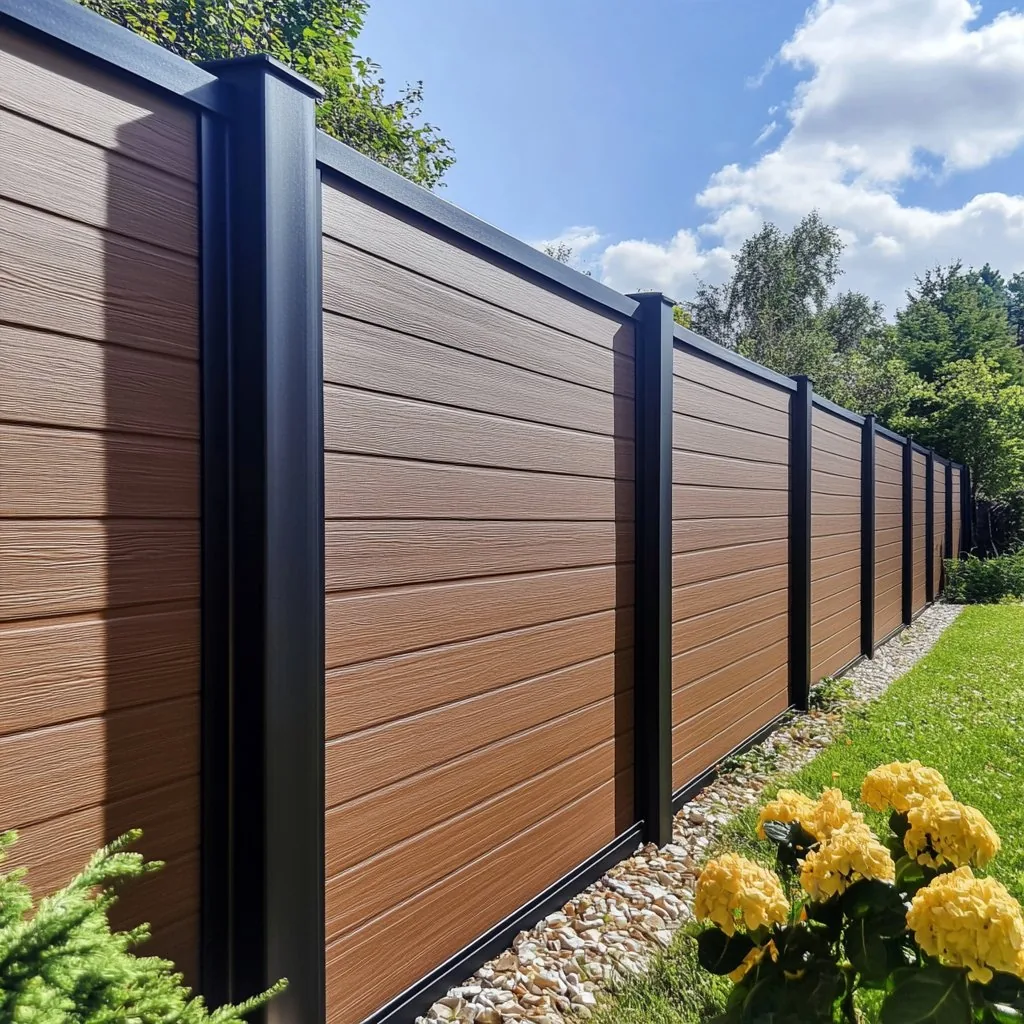
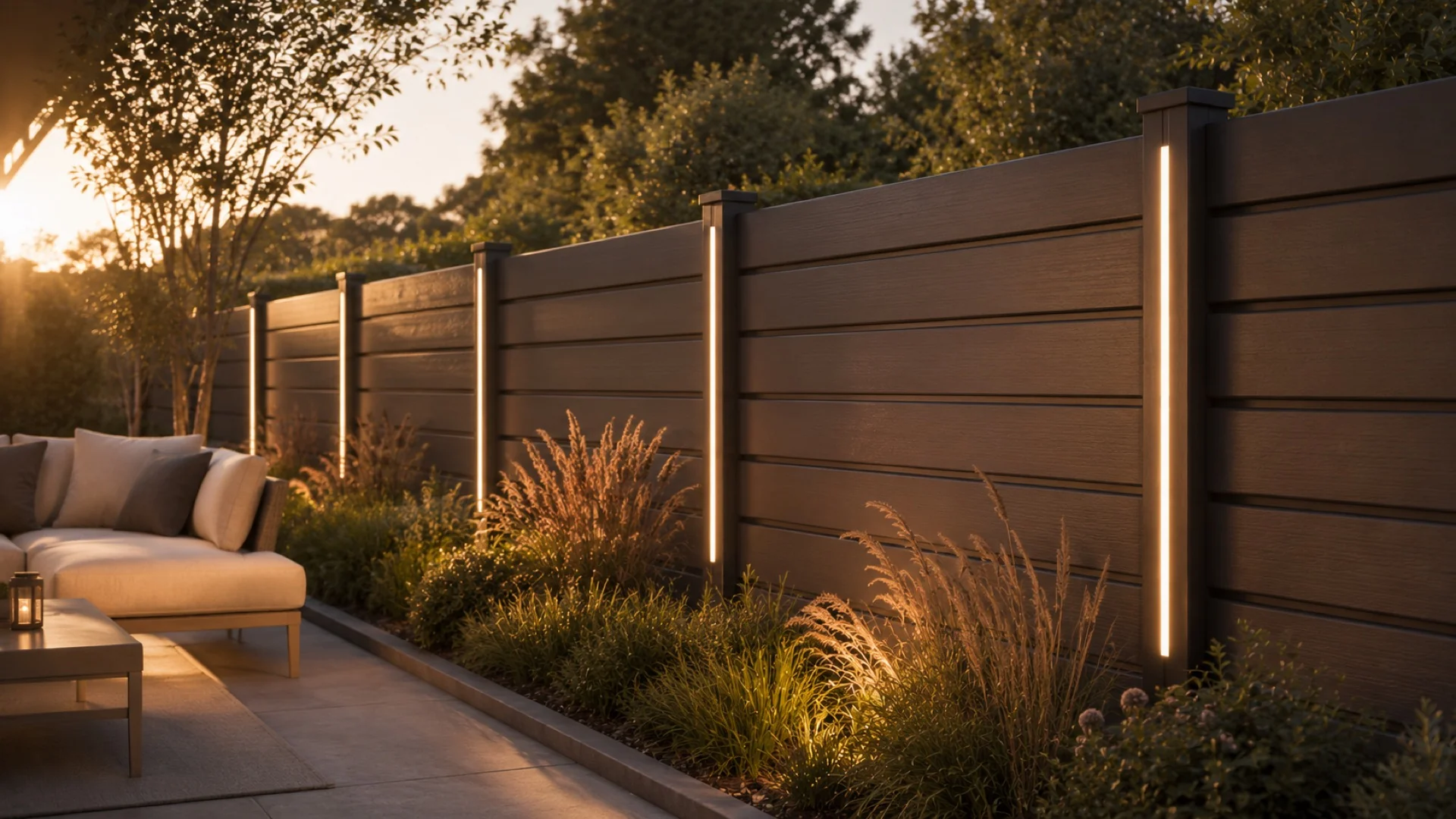
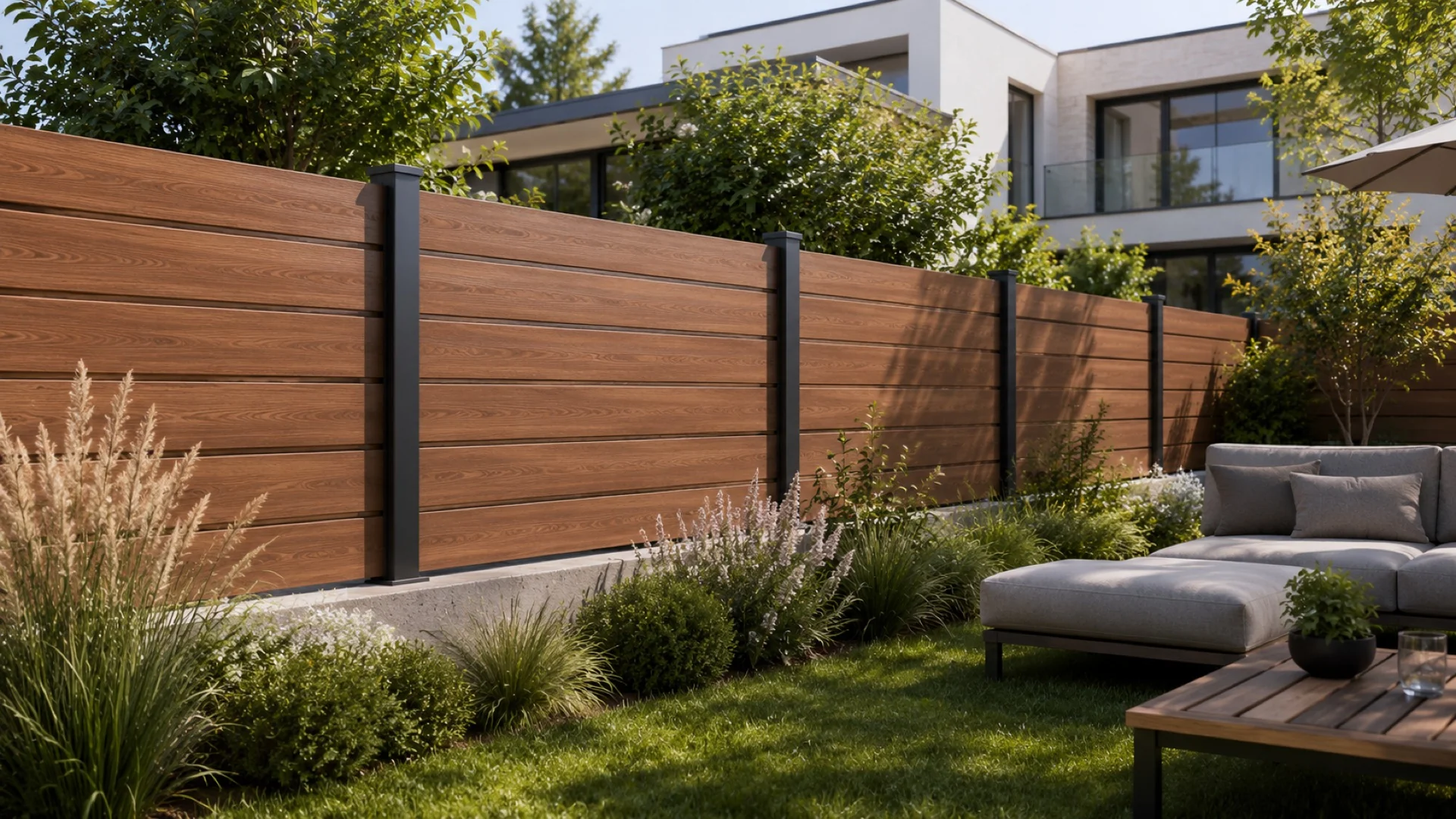
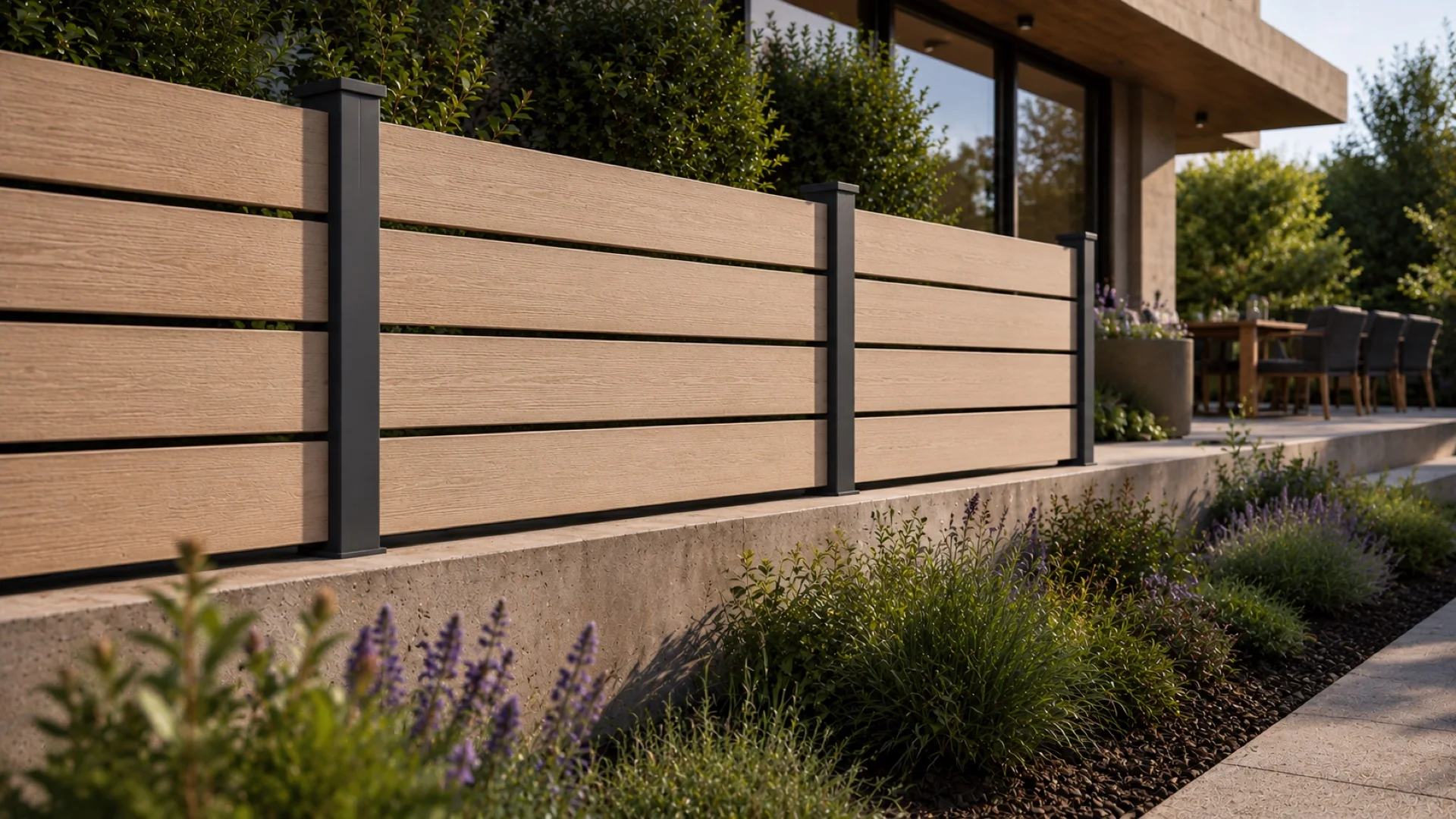
Wood–plastic composite infill with a slim aluminium frame — the warmth of timber without the weather penalty. Five woodgrain finishes; rot-, fade- and insect-resistant. Maintenance: rinse twice a year.
FEATURES
SPECIFICATIONS
Ready to Start Your Project?
Get a personalised quote, request technical documentation, or find an authorised dealer near you.
Available variants
Engineering overview
Where it fits
Residential garden boundary
Specified for private gardens where the client wants the visual softness of wood against planting beds, lawn edges, and terrace zones. Bosco delivers the organic register without the staining cycle that drives most residential timber fences toward neglect by year five.
The 100 mm Standard profile reads as a refined garden screen; the 200 mm Grande profile suits larger plot boundaries where horizontal mass is welcome.
Biophilic facade integration
Where the architectural brief calls for natural-material continuity between facade cladding and perimeter, Bosco extends the timber language of the building envelope outward.
Pair with WPC or thermo-treated timber rainscreen cladding to maintain a coherent material vocabulary across building and boundary, without forcing the perimeter to inherit the maintenance regime of solid hardwood.
Pool surround warm material zone
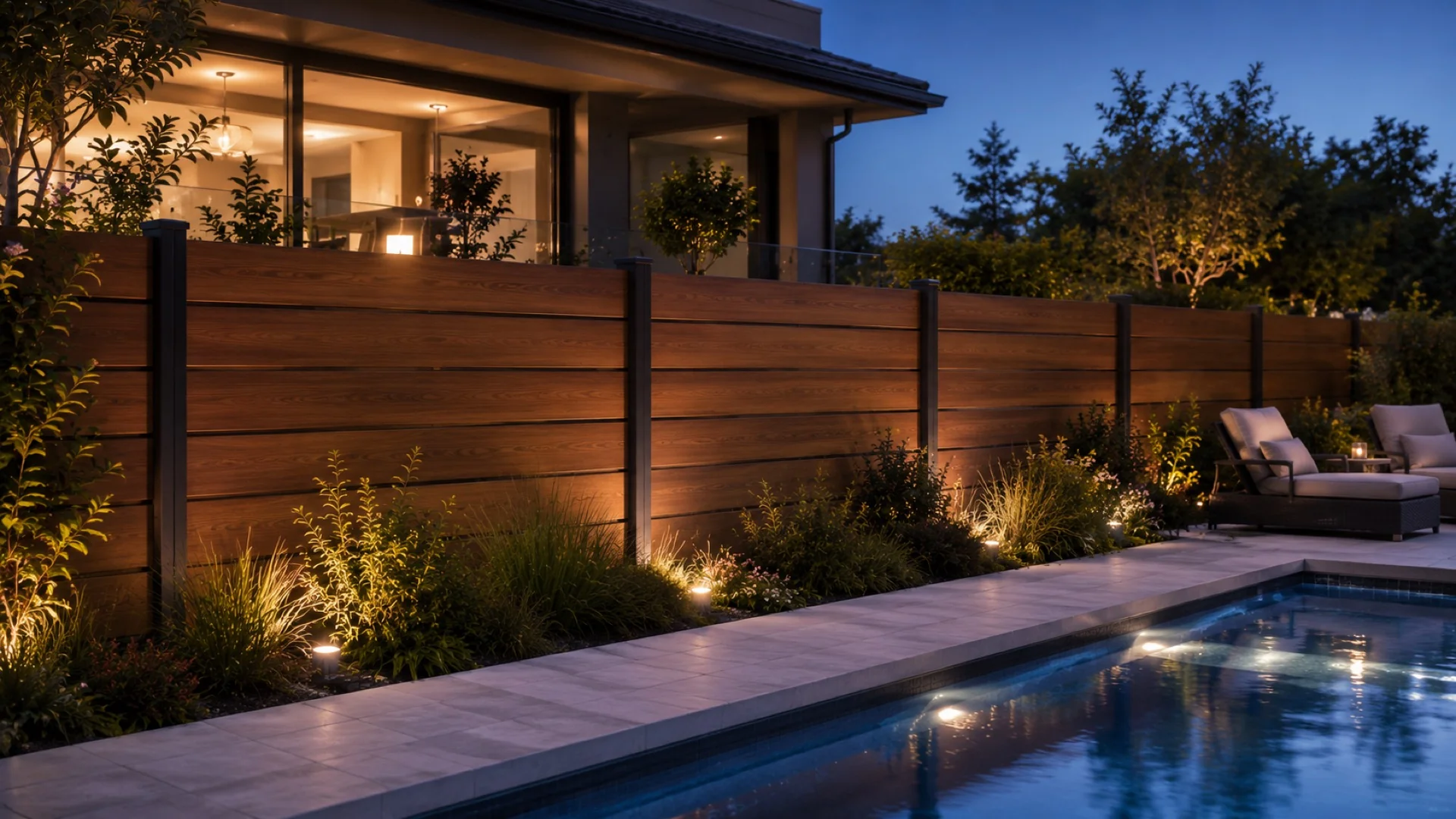
Around pool decks the bare-foot register matters: aluminium and steel read as cold, glass reads as exposing. Bosco creates a warm tactile boundary that shrugs off chlorinated splash and humid micro-climate without warping.
The HDPE matrix prevents moisture absorption that would destroy a solid timber screen in the same position within three to five seasons.
Coastal villa (chlorinated/salt-resistant)
Salt-laden air destroys untreated softwoods and corrodes mild steel. The aluminium 6063-T5 frame resists marine corrosion when properly anodised or powder-coated, and the WPC infill is chemically inert to chloride exposure.
Bosco is therefore appropriate for first-line and second-line coastal residential perimeters where cedar or larch would require replacement within a decade.
Mediterranean / Scandinavian design context
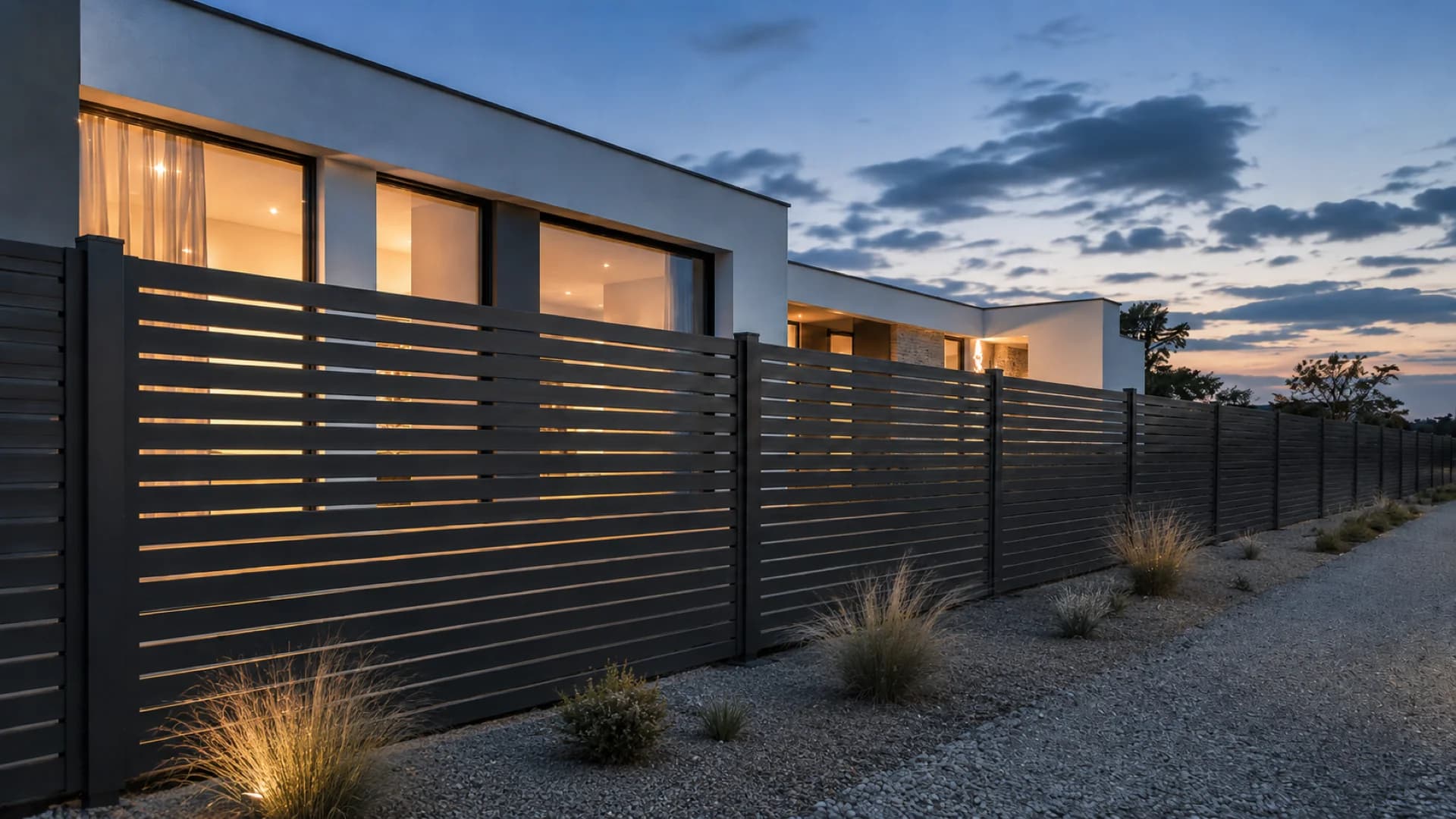
The five-finish palette spans both regional vocabularies: Teak and Walnut serve the warmer Mediterranean palette of stone, render, and terracotta; Driftwood and Anthracite Wood serve the cooler Scandinavian palette of white render, dark zinc, and pale stone.
Oak operates as the neutral middle register suitable for both contexts.
How it compares
Larch / cedar timber fence▾
Pros
- +Authentic timber grain
- +Natural material warmth
- +Lower upfront material cost
Cons
- −Annual oiling or staining required
- −Silvering on south- and west-facing elevations
- −Partial replacement at ground contact within 8-12 years
Why VisioMod
Solid timber screens deliver authentic grain but require annual oiling or staining to retain colour. Bosco delivers an equivalent warm visual register with a 10-year colour stability warranty, no refinishing cycle, and an aluminium frame that does not rot at the post-base interface.
PVC fence panel system▾
Pros
- +Low maintenance
- +Lower price point
Cons
- −Reads as plastic at any reasonable viewing distance
- −Lacks genuine woodgrain depth
- −Embrittles under prolonged UV
Why VisioMod
PVC panel systems offer low maintenance but read as plastic and lack genuine woodgrain depth. Bosco's WPC infill carries real wood fibre at 60 % of mass, producing authentic grain texture and matte tonal variation, while the aluminium frame eliminates the characteristic PVC sag across longer spans.
Pure WPC (no aluminium frame)▾
Pros
- +Authentic WPC reading
- +Lower material cost than hybrid
Cons
- −Dimensional instability across 2000 mm spans
- −Thermal expansion induces bowing and slat pull-out
- −Reduced service life vs framed alternatives
Why VisioMod
Frameless WPC fence systems suffer dimensional instability across the 2000 mm span typical of perimeter work. The Bosco aluminium frame absorbs structural duty entirely, allowing the WPC to function purely as cladding with engineered expansion clearance.
Reading on the facade
Woodgrain pairing strategy follows facade tonality rather than personal preference. Anthracite metal cladding or dark zinc-effect facades pair with Teak Bosco — the warm orange-brown register reads against the cool dark mass and prevents the perimeter from disappearing visually. White render or chalk-toned facades pair with Driftwood Bosco, where the silvered grey register offers contrast without aggression and reads as a considered neutral. Exposed brick or terracotta facades pair with Walnut Bosco, where deep brown undertones harmonise with the masonry palette without repeating it. Anthracite Wood operates as a graphic frame against pale natural stone, and Oak serves as a default warm-neutral for mixed material contexts. Over a 10-year horizon, Bosco holds its tonal register where solid timber would have silvered to uniform grey and PVC would have chalked. At view zones — pool edges, terrace overlooks, garden axes — pair Bosco with Cristallo frameless glass panels: Bosco contributes warmth and visual mass to closed boundaries, Cristallo opens the view selectively.
Foundation & site notes
Foundation requirements are lighter than Trama owing to reduced wind-catch surface relative to the aluminium-skeleton geometry, and broadly equivalent to Lineo specifications: typically 400-500 mm deep concrete footings at 2000 mm post centres, sized per local wind exposure class. Critical detail: WPC slats require an engineered expansion gap at slat-end terminations to accommodate thermal movement across the diurnal and seasonal cycle — typically 3-5 mm per linear metre of slat run. The factory-engineered frame-to-WPC engagement clip system handles this automatically; site-cut adjustments must preserve the gap. Gate post integration uses reinforced 50 × 50 mm aluminium posts with hinge-side reinforcement plate; specify gate posts at order stage rather than substituting standard line posts. Always set the frame plumb before WPC slat insertion — adjustment after infill is restricted.
Care schedule
| Frequency | Task | Duration | Tools |
|---|---|---|---|
| Twice yearly | Freshwater rinse of WPC infill and aluminium frame using garden hose at standard mains pressure to remove pollen, dust, and surface debris | ||
| Annually | Visual inspection of frame anchor bolts at post-base; check torque and re-tighten if loosening is detected, particularly after the first winter cycle | ||
| Annually | Inspect WPC slat engagement clips along the full panel run; reseat any slat that shows lateral displacement from thermal cycling | ||
| Every 2-3 years | Optional low-pressure wash (under 80 bar) with neutral pH cleaner to address ingrained dirt in textured woodgrain finishes; rinse thoroughly | ||
| Every 5 years | Inspect aluminium powder-coat or anodised finish for any chip or scratch reaching substrate; touch up with matched coating to maintain corrosion warranty | ||
| Never | Do not oil, stain, varnish, or sand the WPC infill — surface treatments interfere with the engineered UV protection layer and void the colour stability warranty | ||
| As needed | After exceptional events (storm debris impact, vehicle contact), inspect frame plumb and slat integrity; individual slats and frame sections are replaceable without dismantling the full panel run |
Specified in real projects
Suburban villa, Stuttgart
Family residence perimeter combining street boundary with rear garden view zone overlooking a wooded valley.
Specification: Bosco Standard 100 mm in Oak finish along the street boundary, Cristallo glass at the rear garden view zone. Aluminium frames in matching anthracite powder-coat to align with the villa's window frames.
Outcome: Coherent material reading from street to garden; warm Oak softens the urban frontage while glass preserves the valley view.
Coastal residence, Provence
Salt-exposed second-line coastal property with chlorinated pool.
Specification: Bosco Grande 200 mm in Driftwood finish for pool enclosure and seaward boundary. Aluminium frames with marine-grade powder-coat preparation.
Outcome: Selected for chloride and salt-air resistance; Driftwood register harmonises with the bleached Provençal palette and stone hardscape.
Eco-conscious project, Copenhagen
Low-impact suburban dwelling where the client rejected solid tropical hardwood on sourcing grounds and PVC on aesthetic grounds.
Specification: Bosco Standard 100 mm in Anthracite Wood finish across the full perimeter, integrating with the home's blackened timber rainscreen cladding.
Outcome: Material language extends from the building envelope outward; sustainable specification meets architectural cohesion.
Frequently asked questions
Specified for private gardens where the client wants the visual softness of wood against planting beds, lawn edges, and terrace zones. Bosco delivers the organic register without the staining cycle that drives most residential timber fences toward neglect by year five.
VisioMod System — one platform, seven design lines
VisioMod System