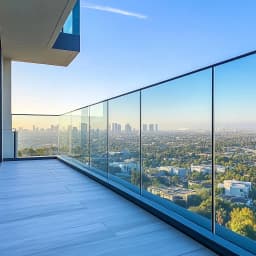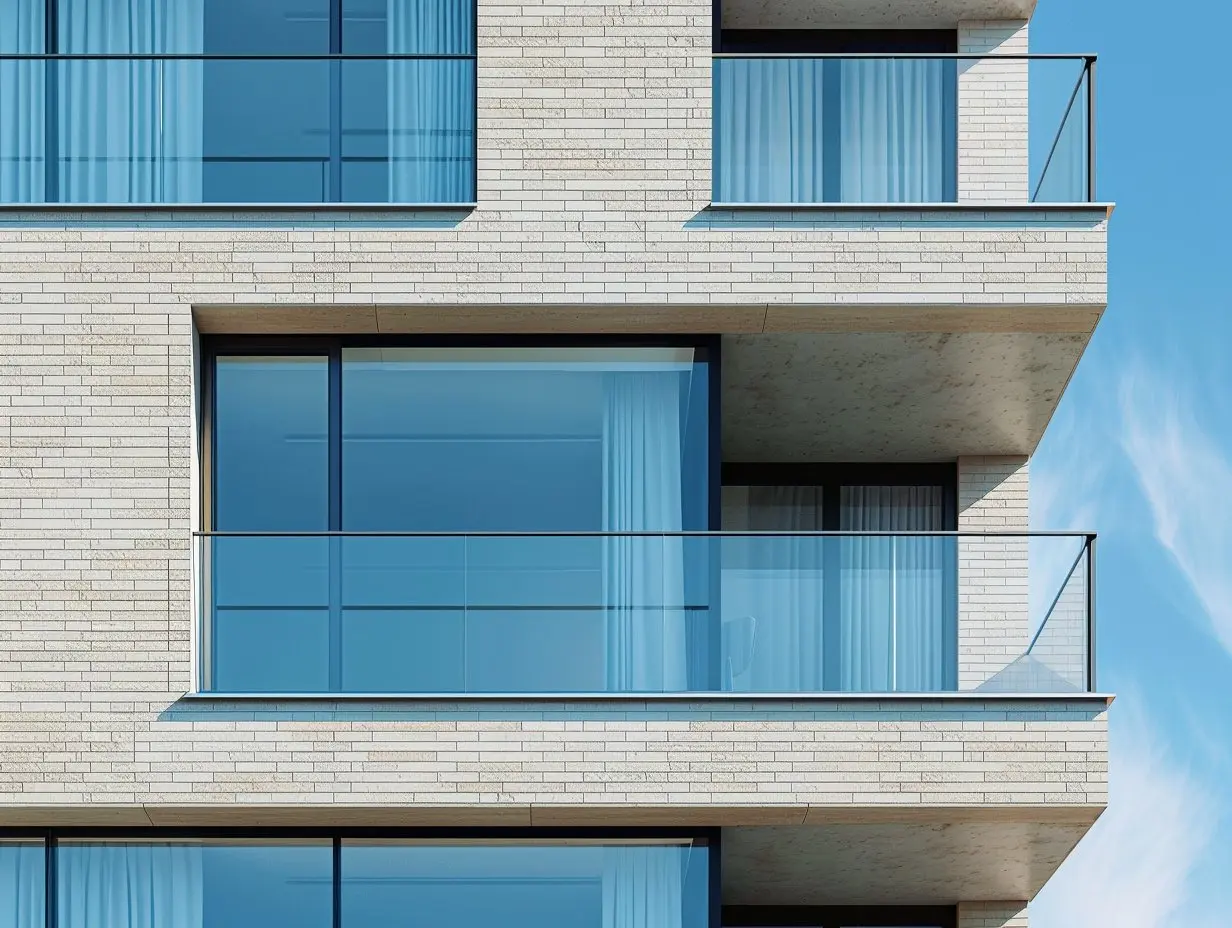
Glass Railing Regulations in Germany: What You Need to Know.
A practical guide to German building regulations for glass railings and balustrades — height requirements, glass specifications, load standards, and approval processes.
If you are specifying or installing glass railings in Germany, you need to understand the regulatory framework. This guide covers the key standards, height requirements, and glass specifications that apply to residential and commercial projects.
Key Standards
Glass railings in Germany must comply with several overlapping standards. The most important are EN 1991-1-1 (actions on structures), DIN 18065 (stairs), and the Landesbauordnung (state building code) of the relevant Bundesland. For the glass itself, EN 12150 (thermally toughened safety glass) and EN ISO 12543 (laminated glass) define material requirements.
Minimum Heights
The standard minimum balustrade height in Germany is 90 cm for residential buildings with a fall height of up to 12 metres. Above 12 metres, the minimum increases to 110 cm. Some Bundesländer require 110 cm universally for balconies. For commercial and public buildings, 110 cm is the general minimum regardless of height.
These measurements are taken from the finished floor level to the top of the railing or glass.
Glass Requirements
For fall protection (absturzsichernde Verglasung), laminated safety glass (VSG) is mandatory. A typical specification is VSG composed of 2 × 8mm ESG (toughened) with a 1.52mm PVB interlayer. This ensures that if one pane breaks, the fragments remain bonded to the interlayer, maintaining the barrier function.
Single-pane toughened glass (ESG) alone is not permitted for fall protection applications, as it shatters into small pieces on impact, removing the barrier entirely.
Load Requirements
Horizontal line loads on balustrades depend on the building category. For residential balconies, EN 1991-1-1 specifies a minimum of 0.5 kN/m at handrail height. For public assembly areas, this increases to 1.0 kN/m or more. The glass and its fixings must be designed to resist these loads with appropriate safety factors.
Mounting Systems
Three main mounting approaches are used for frameless glass railings: base shoe (floor-mounted channel), side-mounted clamps, and point-fixed systems. Each has different structural implications and aesthetic characteristics. Base shoe systems are the most common for balconies as they provide a clean finish and straightforward waterproofing.
Approval Process
Glass railings used as fall protection require either a general building approval (allgemeine bauaufsichtliche Zulassung, abZ) or a project-specific approval (Zustimmung im Einzelfall, ZiE) from the relevant building authority. Most established manufacturers supply systems with existing abZ approvals, which simplifies the specification process considerably.
Conclusion
Glass railings offer an unobstructed view and modern aesthetic, but the regulatory requirements are strict for good reason — they are life-safety elements. Always verify that your specified system carries the appropriate certifications and that the installer follows the manufacturer's installation guidelines precisely.
Related product systems
Explore our product range or get in touch.