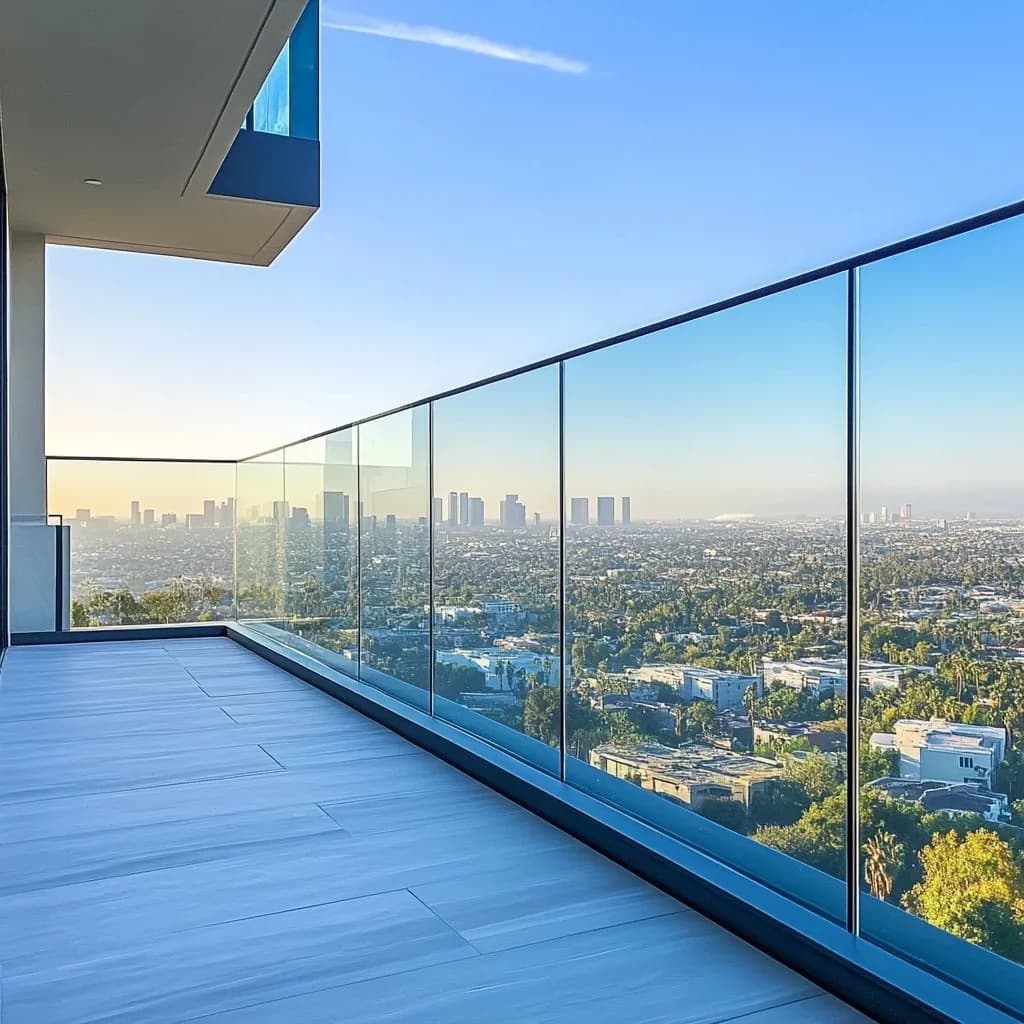
Base Shoe vs Spigot Glass Railing: How to Choose the Right Frameless System.
A practical comparison of base-shoe and spigot glass railings for balconies, terraces and pool edges, with focus on substrate, waterproofing, glass build-up and service access.
Base-shoe and spigot glass railings can both create a frameless appearance, but they solve different project problems. The right choice depends less on style and more on line load, substrate, waterproofing, glass module size, cleaning access and local review route.
Direct answer
Choose a continuous base shoe when the project needs a clean balcony or terrace edge, longer glass lines, hidden clamping and a more controlled drainage/waterproofing detail. Choose spigots when the project is lighter, the fixing points are easy to access and the architectural intent accepts visible point supports below the glass.
What a base shoe does well
A base shoe holds the glass continuously along the bottom edge. That makes it useful for balcony edges, roof terraces and commercial terraces where the load path, glass alignment and visual line need to be consistent. A channel can be top-mounted, side-mounted or integrated into a floor build-up, depending on the slab and waterproofing detail.
The main advantage is control. The profile gives the installer a straight reference line, supports glass alignment and allows wedges or clamping elements to be adjusted inside the channel. It also works well when the project needs repeated modules across a long facade.
What spigots do well
Spigot systems support the glass at separated point fixings. They are common around pools, private terraces and short garden edges where visual lightness and easy drainage around the glass are priorities. They can also be useful where the designer wants air and water to pass freely below the panel.
The trade-off is that each fixing point has to work correctly. Edge distance, anchor type, substrate quality, glass width and panel height become especially important. On exposed balconies or public zones, spigots need careful project review before they are treated as equivalent to a continuous channel.
Substrate and waterproofing
The substrate often decides the system before aesthetics do. A concrete balcony slab, steel edge beam, waterproofed roof build-up, stone terrace or pool surround all create different fixing risks. A base shoe may simplify line alignment but can complicate waterproofing if the membrane route is not planned early. Spigots may reduce continuous profile work but concentrate anchor forces at each point.
Before model selection, collect the slab build-up, edge distance, waterproofing layer, fixing access and any existing cracks or slope details.
Glass build-up
For fall protection, the glass build-up must be treated as part of the system. VSG laminated safety glass, pane thickness, interlayer, edge finish and panel width are not interchangeable after the fixing route has been chosen. A beautiful render is not enough; the glass and the support detail have to be reviewed together.
Decision table
Base shoe is usually stronger for long balcony runs, high visual continuity, repeated modules and integrated architectural lines. Spigots are usually more suitable for short private runs, pool edges, garden boundaries and projects where drainage below the glass is important.
If wind exposure, public use, high fall height or unusual substrate is present, treat both routes as preliminary until the project engineer or local authority review confirms the details.
Specifier note
Do not specify only "frameless glass railing". A useful brief states the mounting type, substrate, glass build-up, approximate module size, line-load context, wind exposure, finish, drainage/waterproofing route and local approval expectation.
FAQ
Is a base shoe always stronger than spigots?
Not automatically. A continuous profile can give a more controlled support line, but final capacity depends on glass build-up, profile design, anchors, substrate and installation.
Are spigots suitable for balconies?
They can be, but balcony fall protection needs stricter review than a garden or pool boundary. Confirm line load, glass build-up, edge distance and local approval route before treating spigots as suitable.
Which system is easier to clean?
Spigots leave more open space below the glass. Base shoes create a continuous profile that may need attention around drainage and debris, but they often give a cleaner architectural line.
Conclusion
The best frameless railing choice comes from project inputs, not from a product photo. Base shoe and spigot systems are both useful when their fixing route, glass build-up and local review path are clear.
Explore our product range or get in touch.