Acoustic and Privacy Fence Planning: What to Define Before Choosing a Panel.
A decision guide for acoustic fences and privacy screens: noise source, height, infill, posts, gates, lighting, coating and maintenance.
A privacy or acoustic fence is not chosen only by panel style. The useful question is what the boundary has to do: block sight lines, reduce perceived traffic noise, protect a pool area, define a garden edge, integrate a gate or create an architectural night effect.
Direct answer
Start with the boundary problem, not the product name. Define the noise or privacy source, required height, exposure, wind path, ground condition, gate openings, lighting need and maintenance expectation. Then choose between aluminium slats, WPC infill, acoustic mass, glass elements or mixed panels.
Privacy is directional
Privacy depends on where the viewer stands. A low neighbour window, a higher street, a raised terrace and a pool edge all create different sight lines. Before choosing a panel, mark the viewing points and the zone that must be screened.
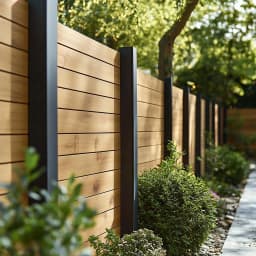
Solid panels give stronger visual blocking, while slatted systems can keep airflow and a lighter facade rhythm. A good design often mixes both: denser panels near living zones and lighter sections where airflow or planting matters.
Acoustic performance
Noise reduction depends on mass, continuity, height and gaps. A fence with decorative openings may look strong but perform weakly against traffic noise. Acoustic planning should identify the source, receiver, distance, reflection surfaces and whether the target is measurable reduction or perceived comfort.
Do not promise a fixed dB reduction without project data. Treat acoustic language as a project review unless a tested panel build-up and site model are available.
Posts, foundations and wind
Privacy panels catch wind. Taller panels, solid infill and exposed corners increase post and foundation demand. Post spacing, footing depth, gate loads and corrosion exposure should be reviewed before a final panel rhythm is chosen.
Gates and access
The fence line often fails visually when gates are treated as an afterthought. Pedestrian gates, driveway gates, locks, automation, intercoms and emergency access should be drawn into the first layout. Matching infill and aligned top rails keep the boundary coherent.
Finish and maintenance
Aluminium, WPC and mixed systems age differently. Powder-coated aluminium offers colour coordination and low routine maintenance; WPC gives a warmer material impression but needs its own cleaning and exposure expectations. Coastal or pool environments may require a stronger coating conversation.
Specifier checklist
Prepare a site plan, boundary length, height target, privacy source, noise source, wind exposure, ground condition, gate locations, lighting preference, RAL colour, coastal/pool exposure and maintenance access. Photos from both sides of the boundary are often more useful than a single elevation.
FAQ
Is a higher fence always better for noise?
Not always. Height helps only when the fence interrupts the line between source and receiver. Gaps, low mass and reflections can reduce the benefit.
Can lighting be integrated into a privacy fence?
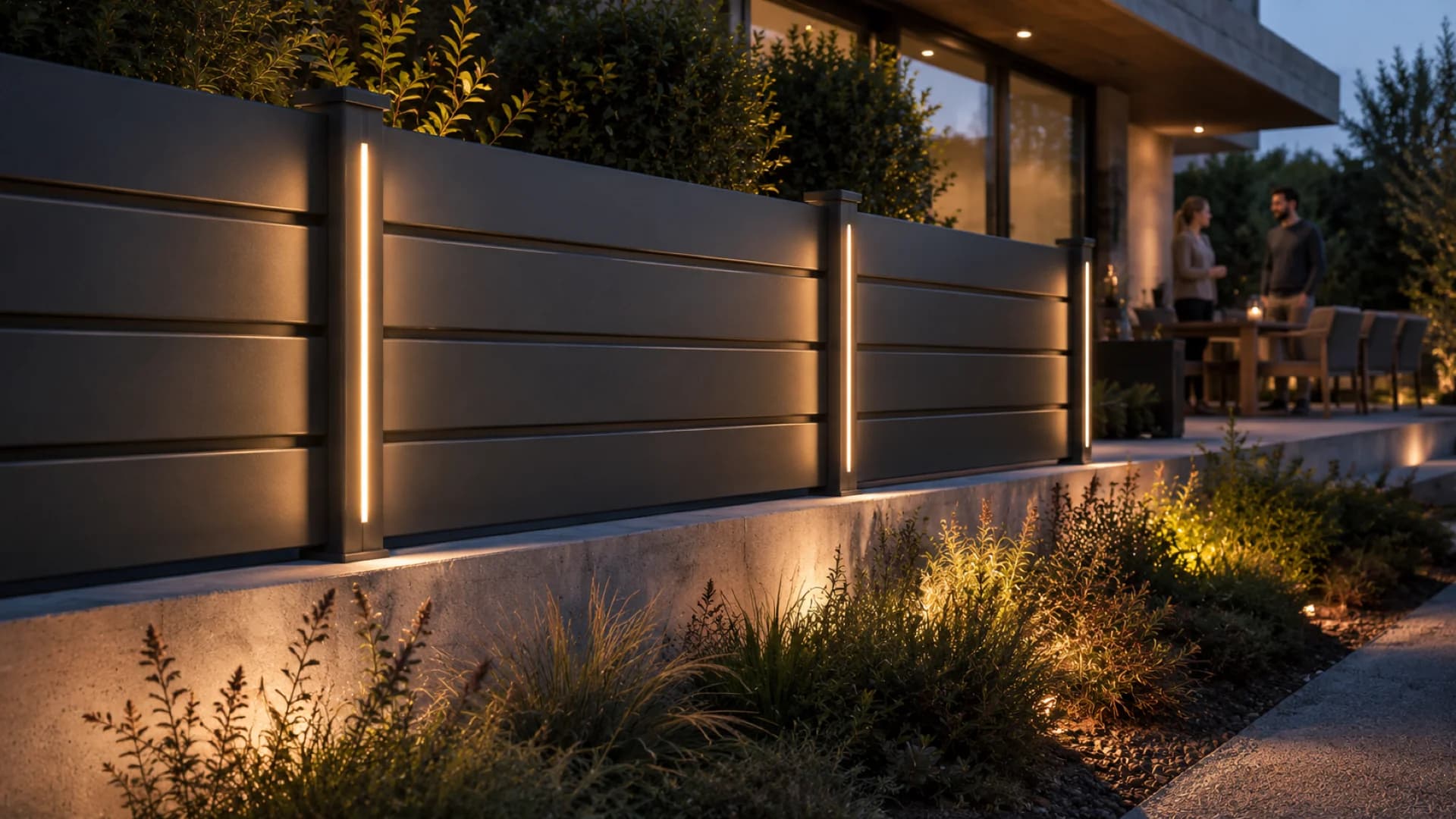
Yes, but cable routing, service access and glare should be planned early. Lighting is strongest when it supports the architecture instead of becoming a late decoration.
Conclusion
The best privacy or acoustic boundary starts as a site problem, then becomes a panel choice. That keeps the result more coherent, easier to price and safer to maintain.
Explore our product range or get in touch.